Sunday, June 21, 2026

Demas Thurlow Craw MOH & Pierpoint M Hamilton MOH


 I hope y'all had a safe, fun and thoughtful Independence Day Celebration.  There are a lot of people who have paid a high price to get us and keep us free.  We should remember them.  Here are two.

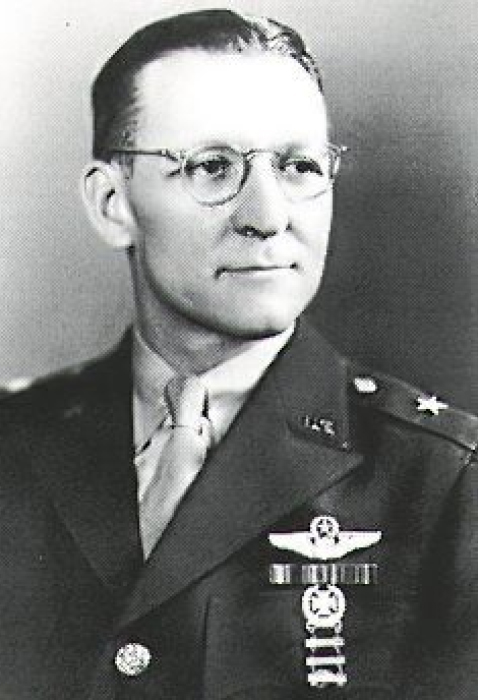
This is an interesting story,  Demas Thurlow Craw Col US Army and his aide Pierpoint M Hamilton Maj US Army, up until Afghanistan, had received the only two Army Air Force Medal of Honor awards not involving air combat.

Source


Source


Colonel Craw's Medal of Honor citation:

For conspicuous gallantry and intrepidity in action above and beyond the call of duty. On November 8, 1942, near Port Lyautey, French Morocco,* Col. Craw volunteered to accompany the leading wave of assault boats to the shore and pass through the enemy lines to locate the French commander with a view to suspending hostilities. This request was first refused as being too dangerous but upon the officer's insistence that he was qualified to undertake and accomplish the mission he was allowed to go. Encountering heavy fire while in the landing boat and unable to dock in the river because of shell fire from shore batteries, Col. Craw, accompanied by 1 officer and 1 soldier, succeeded in landing on the beach at Mehdia Plage under constant low-level strafing from 3 enemy planes. Riding in a bantam truck toward French headquarters, progress of the party was hindered by fire from our own naval guns. Nearing Port Lyautey, Col. Craw was instantly killed by a sustained burst of machinegun fire at pointblank range from a concealed position near the road.

Major Hamilton's Citation for the Medal of Honor

 The President of the United States of America, in the name of Congress, takes pleasure in presenting the Medal of Honor to Major (Air Corps) Pierpont Morgan Hamilton, United States Army Air Forces, for conspicuous gallantry and intrepidity in action above and beyond the call of duty while serving as the Assistant Chief of Staff for Intelligence, Western Task Force, in North Africa during the landings of Operation Torch. On 8 November 1942, near Port Lyautey, French Morocco, Lieutenant Colonel Hamilton volunteered to accompany Colonel Demas Craw on a dangerous mission to the French commander, designed to bring about a cessation of hostilities. Driven away from the mouth of the Sebou River by heavy shelling from all sides, the landing boat was finally beached at Mehdia Plage despite continuous machinegun fire from three low-flying hostile planes. Driven in a light truck toward French headquarters, this courageous mission encountered intermittent firing, and as it neared Port Lyautey a heavy burst of machinegun fire was delivered upon the truck from pointblank range, killing Colonel Craw instantly. Although captured immediately, after this incident, Lieutenant Colonel Hamilton completed the mission.


 *I had no knowledge of Port Lyautey, French Morocco, but Google came to the rescue.  The gap at the very top of the map is the Strait of Gibraltar to help with location.


 Sources

 https://en.wikipedia.org/wiki/Demas_T._Craw#Medal_of_Honor_citation

https://en.wikipedia.org/wiki/Pierpont_M._Hamilton 


Saturday, June 20, 2026

Lloyd "Pete" Hughes MOH


 When I read through this officer's Medal of Honor story, it was horrifically informative.  179 B-24 bombers took off, 54 were shot down, a 30 percent loss rate.  Given that there were 10 or 11 airmen on each that makes the casualty rate over 30%.

In case you didn't recognize the description of the mission above, this again is one of the 5 Medal of Honor Recipients from the Ploesti mission, 3 of whom received it posthumously. 

And the mission provided little change in the progress of the war.  I know that "Feces occurs" is a family version of the real version, but it should not be used in this disaster.  

Anyhow, on with Lt Hughes story.


https://upload.wikimedia.org/wikipedia/commons/f/fd/Lloyd_H_Hughes.jpg 


Hughes' official Medal of Honor citation reads:

For conspicuous gallantry in action and intrepidity at the risk of his life above and beyond the call of duty. On August 1943, 2d Lt. Hughes served in the capacity of pilot of a heavy bombardment aircraft participating in a long and hazardous minimum-altitude attack against the Axis oil refineries of Ploesti, Rumania, launched from the northern shores of Africa. Flying in the last formation to attack the target, he arrived in the target area after previous flights had thoroughly alerted the enemy defenses. Approaching the target through intense and accurate antiaircraft fire and dense balloon barrages at dangerously low altitude, his plane received several direct hits from both large and small caliber antiaircraft guns which seriously damaged his aircraft, causing sheets of escaping gasoline to stream from the bomb bay and from the left wing. This damage was inflicted at a time prior to reaching the target when 2d Lt. Hughes could have made a forced landing in any of the grain fields readily available at that time. The target area was blazing with burning oil tanks and damaged refinery installations from which flames leaped high above the bombing level of the formation. With full knowledge of the consequences of entering this blazing inferno when his airplane was profusely leaking gasoline in two separate locations, 2d Lt. Hughes, motivated only by his high conception of duty which called for the destruction of his assigned target at any cost, did not elect to make a forced landing or turn back from the attack. Instead, rather than jeopardize the formation and the success of the attack, he unhesitatingly entered the blazing area and dropped his bomb load with great precision. After successfully bombing the objective, his aircraft emerged from the conflagration with the left wing aflame. Only then did he attempt a forced landing, but because of the advanced stage of the fire enveloping his aircraft the plane crashed and was consumed. By 2d Lt. Hughes' heroic decision to complete his mission regardless of the consequences in utter disregard of his own life, and by his gallant and valorous execution of this decision, he has rendered a service to our country in the defeat of our enemies which will everlastingly be outstanding in the annals of our Nation's history.

When I was putting this post together, I ran across an interesting fact.  Lt Hughes went to Texas A&M University.  My Children did also.  We moved to College Station to be with them.  Lt Hughes and 8 other A&M Medal of Honor recipients are alumni of A&M.  I read somewhere that there is a room on campus which has pictures, memorabilia and a few of the Medals themselves.  Suffice it to say, I'm going to look a bit further into that and pay it a visit if it's true.

Peace out y'all 

Sources,

https://en.wikipedia.org/wiki/Lloyd_Herbert_Hughes

https://www.tshaonline.org/handbook/entries/hughes-lloyd-herbert-jr 

https://www.af.mil/Medal-of-Honor/Hughes/ 

 https://www.war.gov/News/Feature-Stories/Story/Article/3107011/medal-of-honor-monday-army-2nd-lt-lloyd-hughes/

https://valor.militarytimes.com/recipient/recipient-2240/ 

https://stories.tamu.edu/stories/9-medal-of-honor-recipients-remembered-for-bravery-and-exemplifying-aggie-core-values/ 


Friday, June 19, 2026

Brian Shul Sled Driver


OK this guy is another of my heroes for a lot of reasons.  No, not a Medal of Honor recipient, but let me tell you his story, you'll understand why he was one of my heroes.  He was one of my Instructor Pilots when I was making the transition from F-4 Pilot to Lead-In Fighter Training AT-38 Instructor Pilot.  Suffice it to say, I learned a lot from him, an awful lot.  So, let's get on with the post.

 Major Brian Shul (rhymes with School) came on active duty in the Air Force in 1970, completed pilot training and was sent to Southeast Asia as a T-28 Trojan pilot.

Source

 As one can pretty well ascertain, this wasn't a fabulous aircraft for fighting an air war.  But being fairly slow, a pilot could make out a lot more details than say a pilot in an F-4.  He served as a Foreign Air Advisor teaching other SouthEast Asian Air Forces how to do close air support to troops in contact with the enemy.  On his 213th mission, he was shot down and crashed in the jungle.  One of the drawbacks to the T-28 is that it is fueled with AvGas, basically high octane gas much like in your car, albeit much more flammable.  Unfortunately when he crashed, he was knocked unconscious and the plane caught fire.  Special Forces folks came and pulled him out of the flames.  Suffice it to say he was severely burned and it took a few days before he could be airlifted out of the jungle and provided with more effective medical treatment. Doctors in the hospital in Okinawa didn't believe he would survive but they did their best to treat him.  He was airlifted to Fort Sam Houston in San Antonio when he was capable of traveling. He then underwent 15 operations over the next year.

He underwent several months of physical training with a personal goal of returning to flying status.

OK, to refresh,  severely burned, not expected to live, over a year in the hospital.  Wow! A lot, just to be alive!

 However, at the end of that, he passed a flying physical and began flying again!

Talk about "Never Give Up! Never Surrender", Brian Shul is the epitome of that.

His next flying assignment was in the SR-71.  I'll let him tell you a story about that in the video at the end of this post. 


Brian Shul on the right, his Back Seater Walt Watson on the left


Brian Shul about to refuel his SR-71 on a KC-135


Brian in a Selfie while flying WAY High and WAY FAST


 Now on to that video I promised you.  Pretty Humorous and put an Airline Pilot in his place. Pay attention to his airspeed reading in this video.  After a few whiskeys, he told me that he had significantly slowed down to this speed.  Wouldn't/Couldn't tell me, no matter how may whiskey's I pried him with, how fast he HAD been going!

 The guy that taught me the meaning of "Never give up, Never surrender!"  Miss you Brian, see you in the great beyond.

Peace out y'all 

Sources

 https://usaf.patchcollector.nl/2026/05/18/brian-https://

https://sleddriver.square.site/

 https://en.wikipedia.org/wiki/Brian_Shul 

https://theaviationist.com/2023/05/24/the-sled-driver-has-flown-west/ 


https://www.youtube.com/watch?v=8AyHH9G9et0&t=358s 


Thursday, June 18, 2026

Richard Etchberger MOH


This is a VERY interesting story. Chief Master Sergeant (CMS) Richard Etchberger was born March 5, 1933 and was killed in action March 11, 1968.  Interestingly, he wasn't awarded the Medal of Honor until September 21, 2010.

That should pique your curiosity.  Which brings us to his story which is quite fascinating. I will try to summarize it, but, I strongly recommend you clicking the link and read it.  I'll still be here when you get back.  President Reagan's statement of "Where do we find such men?" applies in triplicate to Chief Etchberger.

A quick summary, a radar station was built in Laos which could direct US aircraft to bombing targets in North Vietnam regardless of time of day or weather.  Obviously, the North Vietnamese weren't happy about it, so they launched an attack against the site.

During the attack Chief Etchberger was killed.  As I mentioned, the details of the attack can be found in the link above.

Then politics got involved.  Because the site was in Laos and although "approved" by the Laotian government, it was a secret.  Since it was a "secret" and the US wasn't supposed to have troops in Laos and even though his actions were "above and beyond the call of duty", Chief Etchberger was awarded the Air Force Cross, USAF's second highest award.  His sons had no knowledge about how their father died having been told he died in a helicopter accident.  In the early 2000's, USAF veterans began lobbying to have the medal upgraded.  In 2008, Michael B. Donley, Secretary of the Air Force approved the upgrade which was also approved by Congress in 2009 and presented to his 3 sons in 2010.  

And, IMHO, it was well deserved.

Chief Etchberger's Medal of Honor Citation

The President of the United States of America, authorized by act of Congress, March 3, 1863, has awarded, in the name of the Congress, the Medal of Honor to Chief Master Sgt. Richard L. Etchberger, United States Air Force, for conspicuous gallantry and intrepidity at the risk of life, above and beyond the call of duty.

Chief Master Sgt. Richard L. Etchberger distinguished himself by extraordinary heroism on March 11, 1968, in the country of Laos. While assigned as Ground Radar Superintendent, Detachment 1, 1043rd Radar Evaluation Squadron. On that day, Chief Etchberger and his team of technicians were manning a top-secret defensive position at Lima Site 85 when the base was overrun by an enemy ground force. Receiving sustained and withering heavy artillery attacks directly upon his unit's position, Chief Etchberger's entire crew lay dead or severely wounded. Despite having received little or no combat training, Chief Etchberger single-handedly held off the enemy with an M-16, while simultaneously directing air strikes into the area and calling for air rescue. Because of his fierce defense and heroic and selfless actions, he was able to deny the enemy access to his position and save the lives of his remaining crew. With the arrival of the rescue aircraft, Chief Etchberger without hesitation repeatedly and deliberately risked his own life, exposing himself to heavy enemy fire, in order to place three surviving wounded comrades into rescue slings hanging from the hovering helicopter waiting to airlift them to safety. With his remaining crew safely aboard, Chief Etchberger finally climbed into the evacuation sling himself, only to be fatally wounded by enemy ground fire as he was being raised into the aircraft.

Chief Etchberger's bravery and determination in the face of persistent enemy fire and overwhelming odds are in keeping with the highest standards of performance and traditions of military service. Chief Etchberger's gallantry, self-sacrifice, and profound concern for his fellow men, at risk of his life, above and beyond the call of duty, reflect the highest credit on himself and the United States Air Force.

A lot of things were done wrong in Vietnam and a lot of good folks were killed because of that.  Chief Etchberger, IMHO, was one of the best.  I'm glad President Reagan stood up for him and hope he took it out on the chickens of a fecal nature (you know what I mean) that wouldn't stand up for the Chief when it happened.   

Rest in peace Chief! 

References

 https://en.wikipedia.org/wiki/Richard_Etchberger

https://www.af.mil/Medal-of-Honor/Etchberger/ 

https://www.cmohs.org/recipients/richard-l-etchberger


Wednesday, June 17, 2026

Leon Vance MOH


Another WOW Medal of Honor recipient.  He did a lot of excellent flying and was lucky through most of his flying career. Which will be the focus of this post.

This recipient's name was Leon Vance, born and raised in Enid Oklahoma.  I'm sure it's just a coincidence that the USAF Air Base located in Enid is named Vance AFB.  

Or maybe not a coincidence. 


 Major Vance was promoted to Captain in April 1942 and Major in July 1942. He was also promoted to LtCol in September 1943.  Of course a lot of things are going on.  First, not everyone comes back from missions, including senior officers.  Second, the Army Air Forces are expanding exponentially. Leaders are needed.


 But it was with a bit of difficulty to leave his wife and daughter and do his duty.


 Major Vance flew his first combat flight to bomb a Luftwaffe airfield on May 30th, 1944. Shortly thereafter he was promoted to Lt Col. 

On June 5th 1944, he was assigned as the flight lead of the squadron.  As such, he wasn't the assigned pilot or co-pilot rather stationed behind them near the radio compartment so he could direct the formation if needed.  As they approached the target, the AAA, unsurprisingly, got very heavy and a shell hit their bomber, killing the pilot and setting an engine on fire.  The co-pilot was initially knocked unconscious, but recovered and pulled the aircraft out of the dive.  LtCol Vance's right foot was nearly severed by the explosion and was trapped in the bulkhead.  However, he as able to assist the co-pilot in recovering the aircraft from the dive, putting out fires and shutting down damaged engines.  After recovering the airplane, he was able to dislodge his foot and bandage his leg.  They headed for home, but as they crossed the channel, they concluded that the bomber could not be landed safely, so LtCol Vance directed the crew to bail out.  He thought the radio operator was too injured to bail out, so LtCol Vance decided to fly the aircraft back over the channel and ditch it to save him.  Upon ditching, he evacuated the aircraft realizing that the radio operator had bailed out with the crew.  Successfully leaving the bomber, he was rescued.

Now, for the hard part.  His injury was so serious that he was sent back to the states for treatment.  Somewhere over the Atlantic, the aircraft was lost and crew and passengers declared dead.

Rest in peace, Hero! 

Medal of Honor Citation

For conspicuous gallantry and intrepidity above and beyond the call of duty on 5 June 1944, when he led a Heavy Bombardment Group, in an attack against defended enemy coastal positions in the vicinity of Wimereaux, France. Approaching the target, his aircraft was hit repeatedly by antiaircraft fire which seriously crippled the ship, killed the pilot, and wounded several members of the crew, including Lt. Col. Vance, whose right foot was practically severed. In spite of his injury, and with 3 engines lost to the flak, he led his formation over the target, bombing it successfully. After applying a tourniquet to his leg with the aid of the radar operator, Lt. Col. Vance, realizing that the ship was approaching a stall altitude with the 1 remaining engine failing, struggled to a semi-upright position beside the copilot and took over control of the ship. Cutting the power and feathering the last engine he put the aircraft in glide sufficiently steep to maintain his airspeed. Gradually losing altitude, he at last reached the English coast, whereupon he ordered all members of the crew to bail out as he knew they would all safely make land. But he received a message over the interphone system which led him to believe 1 of the crewmembers was unable to jump due to injuries; so he made the decision to ditch the ship in the channel, thereby giving this man a chance for life. To add further to the danger of ditching the ship in his crippled condition, there was a 500-pound bomb hung up in the bomb bay. Unable to climb into the seat vacated by the copilot, since his foot, hanging on to his leg by a few tendons, had become lodged behind the copilot's seat, he nevertheless made a successful ditching while lying on the floor using only aileron and elevators for control and the side window of the cockpit for visual reference. On coming to rest in the water the aircraft commenced to sink rapidly with Lt. Col. Vance pinned in the cockpit by the upper turret which had crashed in during the landing. As it was settling beneath the waves an explosion occurred which threw Lt. Col. Vance clear of the wreckage. After clinging to a piece of floating wreckage until he could muster enough strength to inflate his life vest he began searching for the crewmember whom he believed to be aboard. Failing to find anyone he began swimming and was found approximately 50 minutes later by an Air-Sea Rescue craft. By his extraordinary flying skill and gallant leadership, despite his grave injury, Lt. Col. Vance led his formation to a successful bombing of the assigned target and returned the crew to a point where they could bail out with safety. His gallant and valorous decision to ditch the aircraft in order to give the crew member he believed to be aboard a chance for life exemplifies the highest traditions of the U.S. Armed Forces.  


Sources:

https://en.wikipedia.org/wiki/Leon_Vance

https://www.af.mil/Medal-of-Honor/Vance/ 

https://www.militarytimes.com/veterans/military-history/2025/08/05/one-foot-in-the-grave-moh-pilot-bombed-nazis-despite-severed-limb/ 


Tuesday, June 16, 2026

Harl Pease, MOH


This is a tough one.  It touches on the horrors of war.  So, be prepared.


Source


In October 1941, the 19th Bombardment Group of which Capt Pease was a member deployed to Clark Field in the Phillipines.  On December 20th the Group evacuated the Phillipines to Queensland where they launched 16-18 hour missions to attack Japanese bases. 

I got the following portion of the story from this link in Wikipedia.  I've tried and can't describe it any better, so I've copied it in full. 

On August 6, 1942, one engine of Pease's B-17 failed during a mission, forcing a return to its base at Mareeba Airfield for repairs. The 19th BG had already scheduled a "maximum effort" mission against Rabaul, New Britain, on August 7 but Pease and his crew, with their aircraft out of commission, were not scheduled. Pease understood the importance of the mission and was determined to rejoin the group. Only one B-17 at Mareeba was able to fly, a "war-weary" bomber relegated to training. Its engines needed an overhaul, some armament had been dismounted, and the electric fuel-transfer pump had been used for replacement parts. Pease had a fuel tank installed in the bomb bay, with a handpump rigged to transfer fuel, and in less than three hours, was en route to Port Moresby with his crew, all of whom had also volunteered for the mission. They landed at 1:00 a.m. after working or flying almost continuously since 6:00 a.m. the previous day.

With only three hours' crew rest, Pease took off with the group to attack Rabaul's Vunakanau airdrome. While 40 to 50 miles (64 to 80 km) from the target, the group was attacked by more than 30 Japanese fighters. Pease and his crew claimed several of the fighters, fought their way to the target, and bombed successfully, but sustained heavy damage in the attacks.

After leaving the target area, Pease's crippled B-17 fell behind the rest of the formation. Once again attacked by fighters, he was seen to jettison the burning bomb bay fuel tank before falling back out of sight. Pease and his crew were presumed killed in action. Before the B-17 crashed, however, Pease and another crew member were able to bail out; both were captured and taken to a POW camp in Rabaul.  Pease languished there until October 8, 1942. On that date, Pease, three other Americans, and two Australians were forced to dig their own grave, then were beheaded. Postwar, the remains of three of Pease's crew were found and identified; however, the remains of Pease and those killed with him were not recovered 

B-17 similar to the one flown in this post

Source


December 2 1942, the Medal of Honor was presented to Captain Pease's parents by President Roosevelt.  The recommendation had been issued by Major General Kenney with an endorsement personally written by General MacArthur.  

You'll notice that some of the factors in this story did not make it into the Citation below. 

Medal of Honor Citation

For conspicuous gallantry and intrepidity above and beyond the call of duty in action with the enemy on 6–7 August 1942. When 1 engine of the bombardment airplane of which he was pilot failed during a bombing mission over New Guinea, Capt. Pease was forced to return to a base in Australia. Knowing that all available airplanes of his group were to participate the next day in an attack on an enemy-held airdrome near Rabaul, New Britain, although he was not scheduled to take part in this mission, Capt. Pease selected the most serviceable airplane at this base and prepared it for combat, knowing that it had been found and declared unserviceable for combat missions. With the members of his combat crew, who volunteered to accompany him, he rejoined his squadron at Port Moresby, New Guinea, at 1 a.m. on 7 August, after having flown almost continuously since early the preceding morning. With only 3 hours' rest, he took off with his squadron for the attack. Throughout the long flight to Rabaul, New Britain, he managed by skillful flying of his unserviceable airplane to maintain his position in the group. When the formation was intercepted by about 30 enemy fighter airplanes before reaching the target, Capt. Pease, on the wing which bore the brunt of the hostile attack, by gallant action and the accurate shooting by his crew, succeeded in destroying several Zeros before dropping his bombs on the hostile base as planned, this in spite of continuous enemy attacks. The fight with the enemy pursuit lasted 25 minutes until the group dived into cloud cover. After leaving the target, Capt. Pease's aircraft fell behind the balance of the group due to unknown difficulties as a result of the combat, and was unable to reach this cover before the enemy pursuit succeeded in igniting 1 of his bomb bay tanks. He was seen to drop the flaming tank. It is believed that Capt. Pease's airplane and crew were subsequently shot down in flames, as they did not return to their base. In voluntarily performing this mission Capt. Pease contributed materially to the success of the group, and displayed high devotion to duty, valor, and complete contempt for personal danger. His undaunted bravery has been a great inspiration to the officers and men of his unit.

 As I said, a hard story to read.

Peace out y'all 

Sources 

 https://en.wikipedia.org/wiki/Harl_Pease

https://www.lanbob.com/lanbob/H-42Auth/PH93P-MOH.htm  

https://historynet.com/old-soldiers-pacific-b-17-armed-transports/     B-17 Pic


Monday, June 15, 2026

Museum of the American GI


OK, folks, a somewhat similar yet different posting than I have been doing lately. Mrs J and I had a little time on our hands (OK a LOT of time on our hands) and decided to do a bit of exploration of things in our new city of residence.  So, it's a Sunday Afternoon, there's a Soccer game between Argentina and Honduras in Texas A&M's football stadium (US Football stadium).  91,102 people showed up.  This meant that 91,102 people would not be driving around looking for things to do.  So,  it was remarkably quiet and relaxing.  

We decided we'd visit the Texas Museum of the American G.I. which is just south of town.  There was a lot of cool paraphernalia there  ranging back to just after the Civil War all the way up through Afghanistan.  Uniforms, weapons, cooking paraphernalia,  everything an army would need to conduct a campaign . 


There was one exhibit that sobered me quite a bit.


These were the dogtags or replica's of dogtags of Texas Veterans killed in the Vietnam War.  All of them donated by the families who had lost relatives or friends there.

Source


Talk about sobering.  3417 are presently there.  I would suspect there are many more not displayed yet.

In any case, this is an excellent museum.  Lots of guides all over the museum who can answer just about any question you might have about it.  Well designed, the flow is smooth and easy to get around.  Highly recommend a visit (even if you have to fly from Rhode Island, just sayin’).

Peace out y'all! 

Sources you might find interesting

https://americangimuseum.org/

https://americangimuseum.org/discover/exhibits/texas-heroes-exhibit/


Sunday, June 14, 2026

Forrest L. Vosler MOH


 Ok, folks another Medal of Honor Hero to discuss.  Today's story is about Tech Sergeant Forrest L. Vosler.  Sgt Vosler was a radio operator and gunner on B-17s.

 https://upload.wikimedia.org/wikipedia/commons/6/60/Vosler%2C_Forrest_L.jpg

 Staff Sergeant Vosler deployed to the European theater in October of 1943.  Remember that Air Superiority was not attained by the Allies until mid-1944.  So, missions over Germany were dangerous and very costly in casualties. On Dec 20th 1944, his crew and he took off on a mission to attack Bremen Germany with a target time of noon.

One thing the Germans had at the time to counter the airstrikes, was AAA (anti-aircraft artillery for those not in the know).  They had a lot of that, an awful, awful lot of that.  In fact most of the Allied air losses were due to AAA.  But on this mission, the AAA was augmented by 125 German Fighters.  

27 Bombers were lost (10 crewmembers per plane) and the bomber Sergeant Vosler was aboard was shot up and ditched in the English Channel.  Obviously given that this was December, the water was extremely cold.  The tailgunner had been severely injured by the German Fighters.  Sgt Vosler made his way to the back of the aircraft and pulled him out of it.  The crew was getting the life raft out and set up.  Sgt Vosler was injured and could not see out of one eye.  He noticed that the tail gunner was sliding off the wing into the channel.  Sgt Vosler grabbed him and pulled him back onto the wing and held on to him and an aircraft antenna so as to not slide back in the sea.

He was awarded the Medal of Honor for going beyond his duty to save members of his crew.  Because of his injuries which caused blindness in the one eye and poor eyesight in the other, he was medically discharged from the Army Air Force.

Seven men sit near each other with smiles. One stands. 

 On September 6, 1944, President Roosevelt presented him with the Medal of Honor.

Source

He died of heart attack on February 17, 1992 at Titusville, Florida, at the age of 68. He is buried at Arlington National Cemetery.


Medal of Honor Citation

For conspicuous gallantry in action against the enemy above and beyond the call of duty while serving as a radio operator-air gunner on a heavy bombardment aircraft in a mission over Bremen, Germany, on 20 December 1943. After bombing the target, the aircraft in which T/Sgt. Vosler was serving was severely damaged by antiaircraft fire, forced out of formation, and immediately subjected to repeated vicious attacks by enemy fighters. Early in the engagement a 20-mm. cannon shell exploded in the radio compartment, painfully wounding T/Sgt. Vosler in the legs and thighs. At about the same time a direct hit on the tail of the ship seriously wounded the tail gunner and rendered the tail guns inoperative. Realizing the great need for firepower in protecting the vulnerable tail of the ship, T/Sgt. Vosler, with grim determination, kept up a steady stream of deadly fire. Shortly thereafter another 20-mm. enemy shell exploded, wounding T/Sgt. Vosler in the chest and about the face. Pieces of metal lodged in both eyes, impairing his vision to such an extent that he could only distinguish blurred shapes. Displaying remarkable tenacity and courage, he kept firing his guns and declined to take first-aid treatment. The radio equipment had been rendered inoperative during the battle, and when the pilot announced that he would have to ditch, although unable to see and working entirely by touch, T/Sgt. Vosler finally got the set operating and sent out distress signals despite several lapses into unconsciousness. When the ship ditched, T/Sgt. Vosler managed to get out on the wing by himself and hold the wounded tail gunner from slipping off until the other crewmembers could help them into the dinghy. T/Sgt. Vosler's actions on this occasion were an inspiration to all serving with him. The extraordinary courage, coolness, and skill he displayed in the face of great odds, when handicapped by injuries that would have incapacitated the average crewmember, were outstanding. 


Sources

https://en.wikipedia.org/wiki/Forrest_L._Vosler 

https://www.war.gov/News/Feature-Stories/story/Article/2874805/medal-of-honor-monday-army-tech-sgt-forrest-l-vosler/ 

https://www.thisdayinaviation.com/20-december-1943/ 


Saturday, June 13, 2026

Return to Paradise

OAFS Photo
So for the third year in a row, we're heading down to Virginia's Eastern Shore, staying at the same place, with the same people. The Nuke and her tribe and The Missus Herself and Your Humble Scribe. To say I love it down there is an understatement.

Juvat has Medal of Honor posts scheduled through part of next week and I plan to let those flow. After that he'll revert to his normal Monday schedule. I dare say, if I hit a bump in the road, posting wise, he'll have a whole bunch written up and ready to go.

Good wingman, that.

For the vacation I plan on doing vacation-type posts, ya know, today we went swimming, then we threw some meat on the grill (well, Tuttle does that, the boy LOVES to grill and I'm not one to stand in the way.), ate that meat along with whatever sides were prepared, then we drank some beer. Er, um, well, I drank some beer. Tuttle will join in on occasion, but he's more of a wine/liquor kind of guy. Must be the fighter pilot in him, Big Time is the same, though he's all about rum and whiskey, though not at the same time. Only old maintainers make that mistake.

Stop looking at me like that. (See Matthew 7:1 for further guidance.)

I'm not sure if I'm going to finish the Franco-Prussian War tale, I'm almost done with the second book I've read on that conflict and, while fascinating, it's also rather confusing.

It all goes like this:
  • France invades Germany, just a little poke really, then falls back
  • Germans (think Prussians, Bavarians, Saxons, Württembergers, various Hessians, and a few others of that ilk. Germany was, at the time, a concept, not a country) swarm into France and start kicking ass
  • French and their "Emperor" (I put that in quotes because the man who held that title wasn't worthy of shining his uncle's boots, if'n you catch my drift) get surrounded at Sedan, the army there and the "Emperor" go into the bag. So basically the Imperial government is vacant at the head (though the Empress, note, no quotes, the lady kicked ass, did a creditable job of trying to carry on)
  • Then the remaining professional army also goes into the bag after yet another siege
  • The "Government of National Defense" is formed and the French hope to fight on, with thousands of semi-enthusiastic untrained (for the most part) volunteers, a few "voluntolds" in there as well
  • The French "strategy" is to save Paris, which is surrounded, and that is pretty much the only strategy
  • Most of the French populace doesn't live in Paris, but the government does and ... Well, you can guess the rest.
It's all rather confusing, both sides had a plethora of incompetent generals and both headquarters in the field had lots and lots of toadies and minor nobility clogging things up - remember, Prussia had a king at the time, he was the HMFIC. Though not everyone listened to him.

So for the time being, that story will sit idle. Rather like a TV show that gets stopped in mid-season while the execs try to determine if it's worth bringing back.

I won't regale you with politics, as I abhor that topic and most of those who participate in that "sport." I'll leave that to Tuna, Beans will wax political at times as well. Not sure how they get through it without vomiting on their keyboards.

Anyhoo, that's all for now, the Chesapeake Bay beckons and I cannot wait to stand on her shore once more.

Sarge, out.

OAFS Photo


Friday, June 12, 2026

John A Jerstad MOH

 Ya know, sometimes I hate blogger with a passion.  Not 10 minutes ago, I finished this post and hit update and the post disappeared.  Thanks loads, Google!

Now that I got that off my mind, on with the rerun.

Today's post is back on the topic of Medal of Honor recipients, and we'll discuss Major John L Jerstad's actions on one of the deadliest missions flown in WWII.  That would be the raid on Ploesti, Romania code named Operation Tidal Wave in which 53 B-24's were shot down (Crew of 10) and 55 more were damaged.


John A Jerstad Major USAAf 

Source

John L. Jerstad enlisted as an aviation cadet in July 1941. After flight training he was commissioned in February 1942.  In October 1942 he was transferred to Europe and flew B-24s with the 328th Bomb Squadron as a Captain.  In April 1943, he was promoted to Major an became the Wing Commander's Chief Operations Officer.

This tells me something, in 14 months he rose from Lt to Major.  Either he was extremely talented or casualty rates were extremely high.

Or Both! 

By August 1943, Major Jerstad had completed more than the requisite 25 missions to go home. However, as a group operations planner, he had knowledge of an upcoming mission and asked if he'd be allowed to fly on that one.  Which was approved.

That mission was titled "Operation Tidal Wave" which would include 179 B-24s, 18 hours of flying time and 2400 miles round trip to attack the oil refineries in Ploesti Romania.  

The attack was executed, 53 aircraft were lost 10 men per crew.  5 crew members were awarded the Medal of Honor on this mission.  3 of them were  posthumous. 


Source


Major Jerstad was one of them.  3 miles from the target, his B-24 was hit by AAA and caught fire.  Ignoring a close field that he could crash land his critically damaged bomber in, he continued to the target and dropped his bombs.  With the bomb bay doors open the flames became intense and the bomber crashed killing all on board.

Gravestone of Major John L. Jerstad
Source


Rest in Peace, Major Jerstad and your crew.  You earned it, heroes.  

 Citation for the Award of the Medal of Honor


John L. Jerstad, U.S. Air Force Photo

For conspicuous gallantry and intrepidity above and beyond the call of duty. On 1 August 1943, he served as pilot of the lead aircraft in his group in a daring low-level attack against enemy oil refineries and installations at Ploesti, Romania. Although he had completed more than his share of missions and was no longer connected with this group, so high was his conception of duty that he volunteered to lead the formation in the correct belief that his participation would contribute materially to success in this attack. Maj. Jerstad led the formation into attack with full realization of the extreme hazards involved and despite withering fire from heavy and light antiaircraft guns. Three miles from the target his airplane was hit, badly damaged, and set on fire. Ignoring the fact that he was flying over a field suitable for a forced landing, he kept on the course. After the bombs of his aircraft were released on the target, the fire in his ship became so intense as to make further progress impossible and he crashed into the target area. By his voluntary acceptance of a mission he knew was extremely hazardous, and his assumption of an intrepid course of action at the risk of life over and above the call of duty, Maj. Jerstad set an example of heroism which will be an inspiration to the U.S. Armed Forces.[4]


 Rest in peace, Major!

Sources

https://en.wikipedia.org/wiki/John_L._Jerstad 

https://www.war.gov/News/Feature-Stories/Story/Article/2709280/medal-of-honor-monday-army-maj-john-jerstad/ 


Thursday, June 11, 2026

William A Shomo MOH


Ok, another in the series of USAF (and predecessor) Medal of Honor recipient.  This recipient is a member of a list of very few but lucky recipients.  He served in WWII where he earned the medal.  He passed away in 1990 at 81.  So, earned the medal and survived the war.  There aren't a lot of those folks.
 
In any case, on with the story which takes place in the Pacific AOR.  I'll confess that I didn't realize that P-51s were in use there.  
 
Source
 
 
I thought the primary fighter for the long range needed in the Pacific was the P-38.  Well, evidently I was mistaken and learned something new.  The P-51 went into action in the Pacifi in January 1945.  So...Thanks Sarge for offering me the opportunity to learn some History.
 

7 of those 8 Japanese flags occurred on  ONE sortie! 

Source

 
In any case, the subject for this week is Major William A Shomo. 
 

Major Shomo

Source 


Take a look at that picture. Does he look like a badass or what?  Well, let me tell you his story and believe me, when you've read it, you'll add a new definition to the word "Badass".
 
Prior to December 1944, after Major Shomo had been stationed in Papua, New Guinea and flying very short range P-36's and P-40s (a big problem in the little lake called the Pacific Ocean).   At that point, he was transferred to Mindoro, in the Phillipines.  He was given command of an F-6D squadron at that point.  While armed with the standard P-51 6x50 cal machine guns, the F-6D's primary mission was photo reconnaissance.  
 
Butch Schroeder's restored F-6D

F-6D 

Source


That makes this story a little bit more interesting.
 
On January 9, 1945, Major Shomo was leading a reconnaissance mission over northern Luzon.  On spotting a Japanese "Val" dive bomber approaching it's airfield to land.  Major Shomo immediately dived on it and shot it down for his first victory.
 
Two days later, on another reconnaissance mission to photograph Japanese airfields on Luzon, they saw 12 Japanese fighters escorting a bomber.  Major Shomo immediately pulled up in an Immelman turn (basically an vertical 180 degree turn) and engaged the formation.  In the engagement, he attacked two of the escorting  fighters and then the bomber.  All of which he shot down.  At that point he engaged some of the other escorts, shooting down four of them.  His wingman shot down 3 of the remainng 6 aircraft.
 
I expect morale in the Japanese squadron took a hit. 
 
Folks, flying and fighting like that takes a lot of guts and even more skill.  AND...That's not the highest score for a single engagement.  Just so my Navy friends don't protest.  The highest single engagement victory count is.  Commander David McCamble shot down 9 Japanese fighters and two probables in a single engagement. 
 
President Reagan (and I have quoted him recently) said "Where do we get such men?"
 
Good Question. 


Citation for the award of Medal of Honor
For conspicuous gallantry and intrepidity at the risk of his life above and beyond the call of duty. Maj. Shomo was lead pilot of a flight of two fighter planes charged with an armed photographic and strafing mission against the Aparri and Laoag airdromes. While en route to the objective, he observed an enemy twin engine bomber, protected by 12 fighters, flying about 2,500 feet above him and in the opposite direction. Although the odds were 13 to 2, Maj. Shomo immediately ordered an attack. Accompanied by his wingman he closed on the enemy formation in a climbing turn and scored hits on the leading plane of the third element, which exploded in midair. Maj. Shomo then attacked the second element from the left side of the formation and shot another fighter down in flames. When the enemy formed for counterattack, Maj. Shomo moved to the other side of the formation and hit a third fighter which exploded and fell. Diving below the bomber, he put a burst into its underside and it crashed and burned. Pulling up from this pass he encountered a fifth plane firing head on and destroyed it. He next dived upon the first element and shot down the lead plane; then diving to 300 feet in pursuit of another fighter he caught it with his initial burst and it crashed in flames. During this action his wingman had shot down three planes, while the three remaining enemy fighters had fled into a cloud bank and escaped. Maj. Shomo's extraordinary gallantry and intrepidity in attacking such a far superior force and destroying seven enemy aircraft in one action is unparalleled in the southwest Pacific area.
 

Sources

 - https://en.wikipedia.org/wiki/William_A._Shomo

-https://worldwarwings.com/pilot-destroys-40-enemy-planes-wwii/.   

Good info source here, but the number of kills in the URL is wrong he didn't destroy 40 aircraft. I don't know why that is in the URL, that was Dick Bongs kill number

 -https://www.cmohs.org/recipients/william-a-shomo 

-https://en.wikipedia.org/wiki/North_American_P-51_Mustang_variants#P-51D_and_P-51K 

https://alchetron.com/cdn/william-a-shomo-0721dfb0-d2ec-4bf4-a8a3-a89a433630a-resize-750.jpg 


Wednesday, June 10, 2026

I'm Right Here ...

Where I like to eat in Hanford, CA.
OAFS Photo
I am easing back into posting something everyday. Juvat was concerned that his Medal of Honor posts were not generating enough "hits" as the blog has seen in the past. I told him not to worry. This blog has never been about pleasing the masses in order to generate more "hits."

After all, the vagaries of how Google/Blogger counts visits to these parts is suspect at best. When the daily post gets less than 300 hits (average seems to run around 200) I find it hard to believe that the following graph represents anything approaching reality -

Under the hood screenshot
Sure, a hundred thousand hits one day, under ten thousand the next? Sure, I believe that.

I know there's about a hundred hard core readers out there, you all seem to be here every day, you don't always comment, but I know you're there. Might be another hundred or so casual readers, but it's all grist for the mill. I know you folks like the Medal of Honor posts. apparently the spambots do not. Which is a bonus in my estimation.

So, what am I going to be writing about in the near future? I honestly don't know. I'm going to let the Medal of Honor posts go on, there are six left, with my own offerings interspersed with those.

I have a lot of things on my plate right now. Not things I have (or need) to do, but things I want to do. After all, I am retired.

I did have an idea for a new series the other day, after a sleepless night of trying to put the elements of the story together, I dumped the idea. Hey, it felt like work, I don't do that anymore.

I've acquired a new boardgame or three over the past few months, got another one Tuesday. This was truly an impulse buy. I liked the concept, so I put my money where my mouth is and pulled the trigger. 

OAFS Photo
The game is slightly outside of the norm for me, as it is, to some extent, card-driven¹. Which means that another element of chance has been added, outside of the dice rolls of course. I've played other card-driven games which were actually fun. So I thought I'd give it a try. It also comes with a system for solitaire play. Which I need, as I tend to play these for their historical insight as opposed to being competitive.

As I once told my step granddaughter, I'm no longer a very competitive guy. The Air Force broke me of that habit.

"Wanna get promoted?"

"Well, sure, I just have to be the best at my job right?"

"Uh, yeah, sure. You also need to be better than Sergeant Schmuckatelli over there who is the squadron voting officer, volunteers at the local orphanage, and scores very high on the tests."

"Uh, Schmuckatelli is always off doing his additional duties, we never see him around the shop. How does that make any sense, Lieutenant?"

Never did get a good answer on that one. So competitive I'm not, unless it involves chasing a ball around on a field. And I'm far too old for that sort of thing anymore. (I'm 73, my knees act like they're over a hundred, and don't get me started on my back ...)

Anyhoo, I do play games against other humans, usually my family. Which can be fun.

"Uh, honey, are you sure you want to land there and attack Berlin? You'll need to roll eleven or better for that to ..."

"Yay! I rolled a twelve!"

"Why yes, yes you did. Wanna watch TV or something?"

She's exceptional at boardgames, but we used to have a Mattel Intellivision, think early video game, at which I constantly beat her, badly. Funny how we don't play that anymore ...

Ah well, back atcha soon, I promise.


¹ One draws, or is dealt, cards which dictate what you can or cannot do. Want to invade the Philippines? Better have the right card in your hand. Things of that nature.