Showing posts with label MOH. Show all posts

Friday, October 2, 2026

Turney W. Leonard, MOH


Well Campers, we've got another Texas A&M Medal of Honor recipient to talk about.  This one has a couple of interesting facets and a somewhat happy ending.  So fasten your seat belts (always) and we'll be on our way!
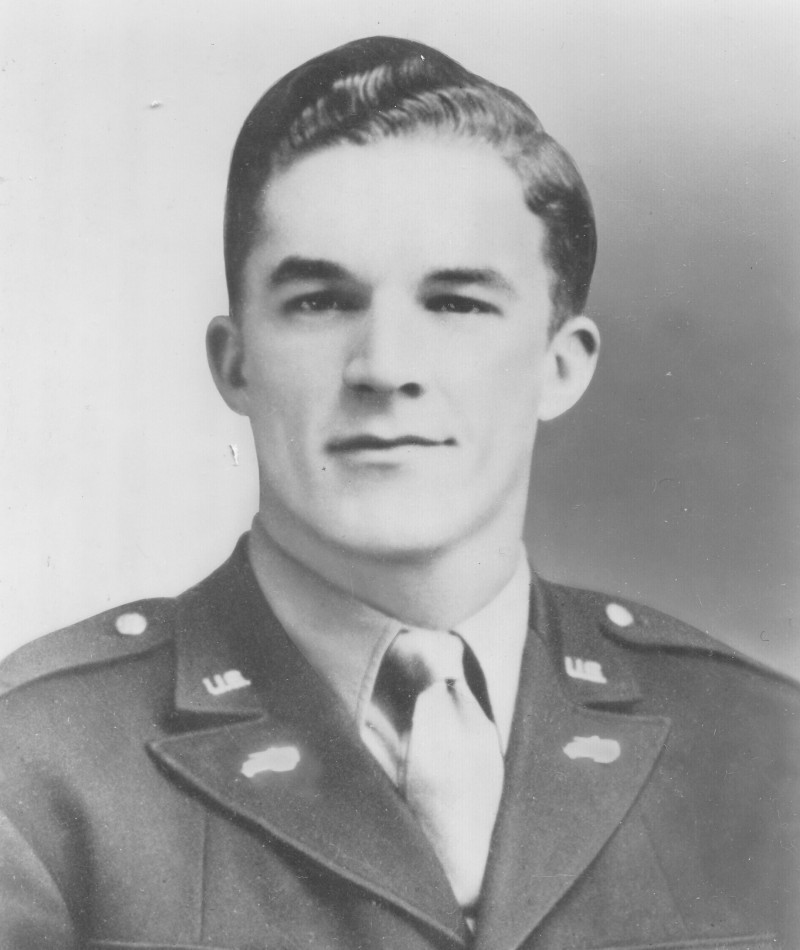
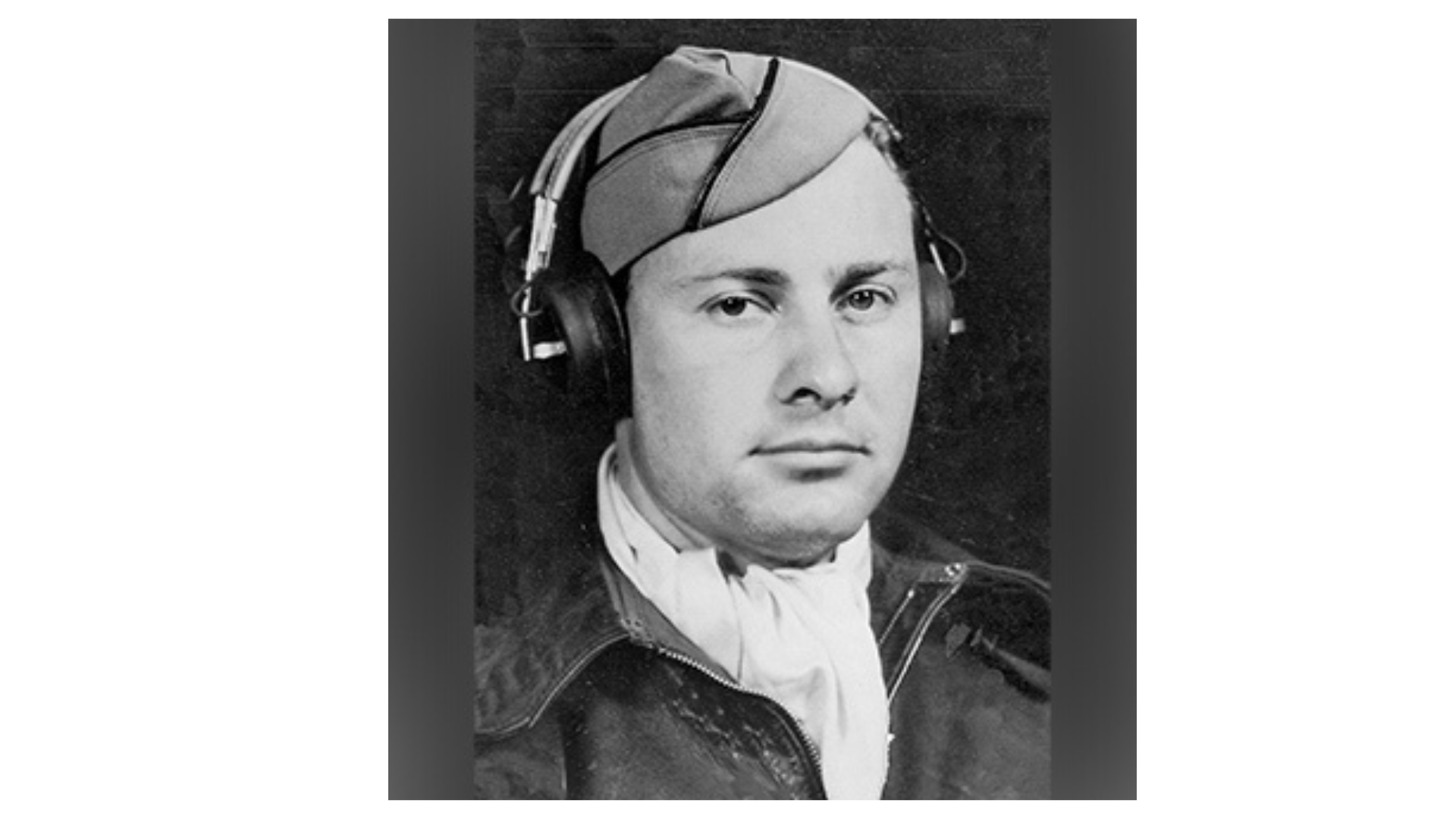
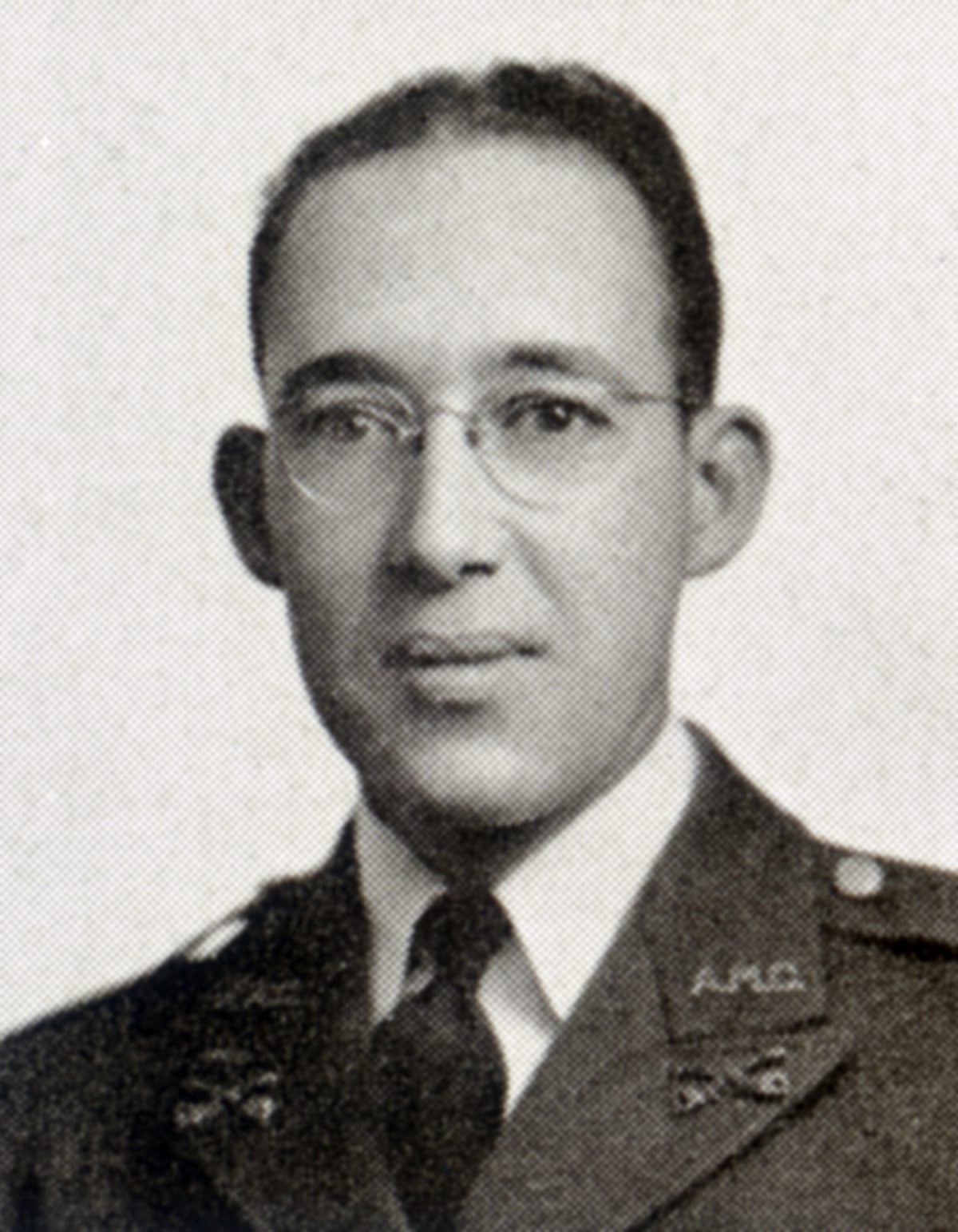
This fine gentleman is Turney White Leonard. (Yes Beans, those are actually his first, middle and last names,  I had to look twice also.). Born in 1921 and graduate from Texas A&M in 1942 with a degree in agriculture.  

Well, it is Texas Agriculture and Mechanical University officially.

Unfortunately, in 1942 we were at war and he was a platoon leader in the 28th Infantry Division.  In November 1944 that division's assignment was to lead an assault on the Siegfried line in the Hurtgen forest, on the Belgian/German border.  This was a very important mission and extremely difficult both because of the terrain, forests and German defenses.

During the fighting, all the command officers of the infantry unit his platoon was assigned to were incapacitated, Leonard assumed command, even though seriously wounded in his arm. Two days later a mortar round severed his wounded arm and he was brought to an aid station.  The Germans continued their attack and the aid station was moved further back.  The seriously wounded were left behind in the hope the Germans would provide care.  He would have none of that, got a rifle and went back to the line.  Unfortunately...His body was later found buried in a crevice that had been buried by a artillery blast. 

For his actions in this battle he was awarded the Medal of Honor on September 1st, 1945.  I think it was well deserved. 

But there's a bit more to the story.  In 1946, the Germans were helping the Americans find remains of the soldiers killed in the area.  One of the Germans found Leonard's Texas A&M ring.  The A&M Ring is a big deal for graduates of the University. The  German kept it for a while and then returned it to the University.  It is now on display there in the A&M Medal of Honor recipient display.


Texas A&M Ring 
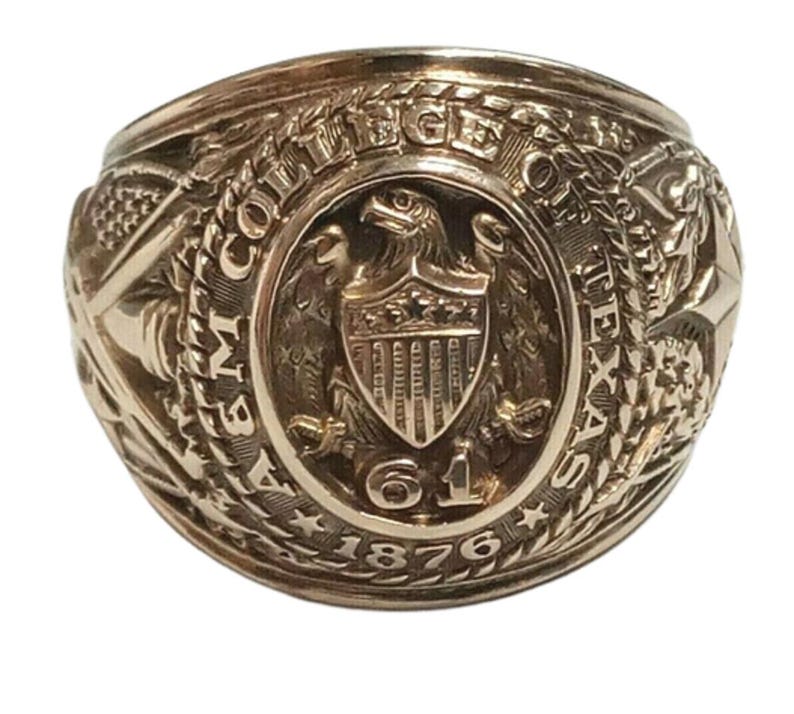
May include: A gold-colored ring with intricate detailing. The ring features an eagle emblem within a shield, surrounded by text that reads "COLLEGE OF THE TEXAS A&M 61 1876". The ring has a vintage or antique appearance.
Source

 Rest in peace, Sir! 

Medal of Honor citation

He displayed extraordinary heroism while commanding a platoon of mobile weapons at Kommerscheidt, Germany, on 4, 5, and 6 November 1944. During the fierce 3-day engagement, he repeatedly braved overwhelming enemy fire in advance of his platoon to direct the fire of his tank destroyer from exposed, dismounted positions. He went on lone reconnaissance missions to discover what opposition his men faced, and on 1 occasion, when fired upon by a hostile machinegun, advanced alone and eliminated the enemy emplacement with a hand grenade. When a strong German attack threatened to overrun friendly positions, he moved through withering artillery, mortar, and small arms fire, reorganized confused infantry units whose leaders had become casualties, and exhorted them to hold firm. Although wounded early in battle, he continued to direct fire from his advanced position until he was disabled by a high-explosive shell which shattered his arm, forcing him to withdraw. He was last seen at a medical aid station which was subsequently captured by the enemy. By his superb courage, inspiring leadership, and indomitable fighting spirit, 1st Lt. Leonard enabled our forces to hold off the enemy attack and was personally responsible for the direction of fire which destroyed 6 German tanks.


 Sources:

https://en.wikipedia.org/wiki/Turney_W._Leonard

https://www.cmohs.org/recipients/turney-w-leonard 

https://www.tshaonline.org/handbook/entries/leonard-turney-white   (The Ring).

https://historynet.com/battle-of-hurtgen-forest-fight-for-schmidt-and-kommerscheidt/   An excellent summary and explanation of the battle.


Monday, September 28, 2026

Clarence Sasser MOH


Another Texas A&M Medal of Honor Recipient 

Source


This is an interesting story of a hero for a lot (and I DO mean a LOT!) of reasons. 

Specialist 5th Class Sasser was an Army Medic assigned to the Headquarters Company, 3rd Battalion, 60th Infantry Regiment, 9th Infantry Division,Headquarters and Headquarters Company, 3rd Battalion, 60th Infantry Regiment, 9th Infantry Division. 

Man, I'm glad I didn't have to report that assignment on my OER. Talk about writer's cramp!  

On with the show, juvat!  Aye, Sarge.

January 10, 1968, he was assigned to a combat unit which was patrolling on a reconnaissance mission along the Mekong River. They came under fire as soon as the helicopters started landing.  Sasser was hit in the leg.  Other soldiers also required medical treatment so he crawled over to them.  While crawling back and forth, he was wounded by shell fragments.  Disregarding the injuries, he continued crawling to other wounded soldiers and dragging them back to safety, or what was more likely defined as a "safer" location.  I doubt it was "Safe!".  Anyhow, this went on for almost 20 hours and he and the unit were not evacuated until the next day.

Fortunately, he recovered from his wounds and received the Medal of Honor from President Nixon. 


Clarence Sasser, a gray-haired black man standing at a microphone, wearing a medal on a blue ribbon around his neck
Source

 After his medical discharge, he attended Texas A&M studying Chemistry. He did not graduate but received an Honorary Degree in 2014.  

While being interviewed by the Library of Congress, he said "There's no way I could have, in my mind, not went to see about someone when they hollered medic. Repayment of the adulation these guys heaped on you demanded that you go."[ 

He also provided a 4 year, $100,000 scholarship to one Veteran each year.   

He passed away in 2024 at age 76.  

Rest in Peace, Warrior! 


Medal of Honor Citation to SP5 Clarence Sesser

For conspicuous gallantry and intrepidity in action at the risk of his life above and beyond the call of duty. Specialist 5th Class Sasser distinguished himself while assigned to Headquarters and Headquarters Company, 3d Battalion. He was serving as a medical aidman with Company A, 3rd Battalion, on a reconnaissance in force operation. His company was making an air assault when suddenly it was taken under heavy small arms, recoilless rifle, machinegun and rocket fire from well fortified enemy positions on three sides of the landing zone. During the first few minutes, over 30 casualties were sustained. Without hesitation, Specialist 5th Class Sasser ran across an open rice paddy through a hail of fire to assist the wounded. After helping one man to safety, he was painfully wounded in the left shoulder by fragments of an exploding rocket. Refusing medical attention, he ran through a barrage of rocket and automatic weapons fire to aid casualties of the initial attack and, after giving them urgently needed treatment, continued to search for other wounded. Despite two additional wounds immobilizing his legs, he dragged himself through the mud toward another soldier 100 meters away. Although in agonizing pain and faint from loss of blood, Specialist 5th Class Sasser reached the man, treated him, and proceeded on to encourage another group of soldiers to crawl 200 meters to relative safety. There he attended their wounds for five hours until they were evacuated. Specialist 5th Class Sasser's extraordinary heroism is in keeping with the highest traditions of the military service and reflects great credit upon himself, his unit, and the U.S. Army. 


Sources

  https://en.wikipedia.org/wiki/Clarence_Sasser 

https://en.wikipedia.org/wiki/Chenango,_Texas 

https://stories.tamu.edu/stories/9-medal-of-honor-recipients-remembered-for-bravery-and-exemplifying-aggie-core-values/ 


Wednesday, September 23, 2026

Frederick W. Castle MOH


 Ok, a bit sorry. I got a bit wrapped up in things of the here and now and not WWII history. So...This is a bit short.

Talk about fast promotion.  Took me 20 years to go from 2Lt to LtCol.  Look at how it went in WWII.
 

Pinning on BG rank 
In June 1942, he was a Captain, in November, 1944 he was promoted to Brigadier General. World War tends to accelerate promotions.


On Christmas Ever 1944, he was co-piloting the Lead Bomber. 


 Unfortunately...


In addition to the Medal of honor, his other decorations include the Distinguished Service Cross, Legion of Merit, four Distinguished Flying Crosses, four Air Medals and the Purple Heart. 

 Medal of Honor Citation

CITATION:

         “For conspicuous gallantry and intrepidity in action above and beyond the call of duty while serving with the 487th Bombardment Group (H), 4th Bombardment Wing, Eighth Air Force.

Brigadier General Castle was air commander and leader of more than 2,000 heavy bombers in a strike against German airfields on 24 December 1944. En route to the target, the failure of one engine forced him to relinquish his place at the head of the formation. In order not to endanger friendly troops on the ground below, he refused to jettison his bombs to gain speed and maneuverability. His lagging, unescorted aircraft became the target of numerous enemy fighters which ripped the left wing with cannon shells, set the oxygen system afire, and wounded two members of the crew. Repeated attacks started fires in two engines, leaving the Flying Fortress in imminent danger of exploding. Realizing the hopelessness of the situation, the bail-out order was given. Without regard for his personal safety he gallantly remained alone at the controls to afford all other crewmembers an opportunity to escape. Still another attack exploded gasoline tanks in the right wing, and the bomber plunged earthward, carrying General Castle to his death. His intrepidity and willing sacrifice of his life to save members of the crew were in keeping with the highest traditions of the military service.”

/s/ HARRY S. TRUMAN


 Sources

 https://www.thisdayinaviation.com/24-december-1944/

https://www.cmohs.org/recipients/frederick-w-castle 

https://www.uswarmemorials.org/html/people_details.php?PeopleID=27166  good quote

https://en.wikipedia.org/wiki/Frederick_Walker_Castle  

https://www.af.mil/About-Us/Biographies/Display/Article/108537/brigadier-general-frederick-w-castle/ 

https://www.thisdayinaviation.com/24-december-1944/ 


Friday, September 18, 2026

Major Horace S. Carswell, Jr. MOH


 I caught sight of this hero on a Texas A&M website that showed pictures of the 9 former cadets who had received the Medal of Honor.  However, he was only at A&M for a year when his Lutheran Uncles convinced him to transfer to TCU.  But, once an Aggie always an Aggie (at least that's what my kids have told me!) After Graduation, he joined the Army Air Corps and went through the Cadet Pilot training program finally getting his wings. That stoked my curiosity as Carswell AFB has been around for a very long time.  So...Here we go. 


Source


 After getting commissioned and his Pilot Wings, he progressed through the ranks prior to Pearl Harbor when he had reached the rank of Major.

Source

He was assigned to B-24 J model which had an onboard targeting radar.  Assigned to the Pacific, he and his crew would attack Japanese convoys at very low level in the hundreds of feet above the sea instead of the usual 20K feet.  Having dropped a bomb or two in my day, I understand the reason.  The  closer you are to the target, the more accurate you get.  Dropping bombs from 20K feet is difficult to be accurate.  Doing so from 500' is much more accurate.  

But...

It's also easier for the enemy as well as the importance of avoiding flying debris from the explosion.

On the night of October 26, 1944, he and his crew are flying single ship and find a Japanese convoy.  They attack and after the pass, elect to make a second pass.  Generally not a good idea to re-attack an alerted target.  His second attack is successful in hitting the target, but the target also was successful in hitting his bomber.  As he left the target area, he bomber had lost 2 engines and a third one was running rough. The hydraulic system was damaged, making the aircraft difficult to control, and a fuel tank was ruptured and venting fuel.  They were able to get out of the fight and over land where he directed the crew to bail out.  Unfortunately, the bombardier's parachute was destroyed in the battle.  Additionally, his Co-Pilot was injured also.  Major Carswell decided to try to bring the plane back to home base.  As they got over the island, they tried to fly over the mountains, but the plane didn't have enough power to get over them.  The three were killed on impact.

War IS hell! 

Before this mission, he had also been recommended for a  Distinguished Flying Cross.  This was approved before the accident/shootdown occurred.  Hence both citation are listed below.

Citation for Major Horace S. Carswell Jr.  Medal of Honor

He piloted a B-24 bomber in a one-plane strike against a Japanese convoy in the South China Sea on the night of 26 October 1944. Taking the enemy force of 12 ships escorted by at least two destroyers by surprise, he made one bombing run at 600 feet, scoring a near miss on one warship and escaping without drawing fire. He circled and, fully realizing that the convoy was thoroughly alerted and would meet his next attack with a barrage of anitaircraft fire, began a second low-level run which culminated in two direct hits on a large tanker. A hail of steel from Japanese guns riddled the bomber, knocking out two engines, damaging a third, crippling the hydraulic system, puncturing one gasoline tank, ripping uncounted holes in the aircraft, and wounding the copilot; but by a magnificent display of flying skill, Maj. Carswell controlled the plane's plunge toward the sea and carefully forced it into a halting climb in the direction of the China shore. On reaching land, where it would have been possible to abandon the staggering bomber, one of the crew discovered that his parachute had been ripped by flak and rendered useless; the pilot, hoping to cross mountainous terrain and reach a base, continued onward until the third engine failed. He ordered the crew to bail out while he struggled to maintain altitude, and, refusing to save himself, chose to remain with his comrade and attempt a crash landing. He died when the plane struck a mountainside and burned. With consummate gallantry and intrepidity, Maj. Carswell gave his life in a supreme effort to save all members of his crew. His sacrifice, far beyond that required of him, was in keeping with the traditional bravery of America's war heroes.
 

Distinguished Flying Cross Citation

The President of the United States of America, authorized by Act of Congress July 9, 1918, takes pride in presenting the Distinguished Service Cross (Posthumously) to Major (Air Corps) Horace Seaver Carswell, Jr., United States Army Air Forces, for extraordinary heroism in connection with military operations against an armed enemy while serving as Pilot of a B-24 Heavy Bomber in the 374th Bombardment Squadron, 308th Bombardment Group (H), Fourteenth Air Force, while participating in a bombing mission on 16 October 1944, against enemy Japanese surface vessels in the South China Sea. During a sea-sweep mission along the China Coast, a task force of six Japanese naval vessels was located by means of radio equipment. A destroyer and a cruiser were singled out for attack. During four runs over the target at an altitude of 400 feet and under intense fire from the supporting vessels, both were sunk. The plane was not struck and returned to the mainland with less than one hour's supply of gas. The exceptional courage, gallantry, cool judgment and skill demonstrated by Major Carswell in attacking such a large naval task force with his lone plane in the face of almost certain destruction, reflect great credit upon himself, the Army Air Forces and the Army of the United States.

 Peace out Y'all!

 Sources

 https://en.wikipedia.org/wiki/Horace_S._Carswell_Jr. 

https://texoso66.com/2019/11/21/major-horace-s-carswell/ 

https://corps.tamu.edu/medal-of-honor-recipients/ 

https://www.tshaonline.org/handbook/entries/carswell-horace-s-jr 


Wednesday, September 16, 2026

Leon Johnson Medal of Honor


Ok, this one is difficult for me, I'm of two minds here.  First, Colonel Johnson (rank at the time)  was awarded the Medal of Honor for the B-24 Raid on the Ploesti Oil Refinery.  He was one of the five Medals awarded in the attack.*  

He was one of only two of the recipients who survived the mission.  He was in the lead aircraft as the mission began. As  we've read on other reports of the medals awarded, the majority were awarded to crews who were towards the end of the attack as were the 3 Medal of Honor awarded posthumously. There were also 56 Distinguished Flying Cross's awarded on the mission. Air medals were awarded to ALL crew members on the mission. 

But, he was there, not sitting at a desk in London "commanding" the mission." Got to give him credit for that.

So, on with the story. 


 Photo after Col Johnson was awarded the Medal of Honor.


 Operation Tidal Wave was the mission code name for an attack on the Axis Petroleum Refinery in Ploiesti Romania.  177 B-24 Bombers were committed to the attack.  53 of them and 500 crew members were lost.

101 Civilians were killed in the attack and 238 injured. A tidbit I didn't know was that one of the bombers that was shot down crashed into a women's prison and killed about half of the total civilian casualties.

 The attack temporarily eliminated about 46 percent of Ploesti’s annual production, but all the damaged refineries were back in full production within three months, making the attack fairly ineffective. 

5 Medals of Honor were awarded, 3 of which were posthumous. Leon Johnson was one of the Survivors, John Kane was the other.

 The mission was flown at ultra-low altitudes to enhance surprise.  One of the lessons learned (and relearned many, many times again) is that large formations of aircraft at low altitude are unlikely to surprise the folks in the target area nor the people along that route.


Source


 Suffice it to say, this mission was a failure.

But....This is the official picture of General Johnson as the 4 star commander of Strategic Air Command.  I'll leave it at that. 

Source


 Citation for the award of the Medal of Honor to Col Leon Johnson

For conspicuous gallantry in action and intrepidity at the risk of his life above and beyond the call of duty on 1 August 1943. Col. Johnson, as commanding officer of a heavy bombardment group, led the formation of the aircraft of his organization constituting the fourth element of the mass low-level bombing attack of the 9th U.S. Air Force against the vitally important enemy target of the Ploesti oil refineries. While proceeding to the target on this 2,400-mile flight, his element became separated from the leading elements of the mass formation in maintaining the formation of the unit while avoiding dangerous cumulous cloud conditions encountered over mountainous territory. Though temporarily lost, he reestablished contact with the third element and continued on the mission with this reduced force to the prearranged point of attack, where it was discovered that the target assigned to Col. Johnson's group had been attacked and damaged by a preceding element. Though having lost the element of surprise upon which the safety and success of such a daring form of mission in heavy bombardment aircraft so strongly depended, Col. Johnson elected to carry out his planned low-level attack despite the thoroughly alerted defenses, the destructive antiaircraft fire, enemy fighter airplanes, the imminent danger of exploding delayed action bombs from the previous element, of oil fires and explosions, and of intense smoke obscuring the target. By his gallant courage, brilliant leadership, and superior flying skill, Col. Johnson so led his formation as to destroy totally the important refining plants and installations which were the object of his mission. Col. Johnson's personal contribution to the success of this historic raid, and the conspicuous gallantry in action, and intrepidity at the risk of his life above and beyond the call of duty demonstrated by him on this occasion constitute such deeds of valor and distinguished service as have during our Nation's history formed the finest traditions of our Armed Forces. 

 My heartburn with this one is two words in his Citation. Those would be "destroy totally".  History indicates that to be untrue.  The refinery was up and producing petroleum at pre-attack levels in 3 months.

* For those wondering, these are the 5 Medal of Honor recipients for their actions on this mission, Lt Col Addison Baker (posthumous), Maj John Jerstad (posthumous), Lt Lloyd Hughes (posthumous), Col Leon Johnson, and Col John Kane.


Sources 

 https://en.wikipedia.org/wiki/Leon_W._Johnson

https://www.maxwell.af.mil/News/Photos/igphoto/ 

https://warhistory.org/article/the-ploesti-raid

https://www.realclearhistory.com/2021/08/02/1st_ploesti_raid_bold_but_ineffective_787621.html


Monday, September 14, 2026

MOH History

 This is a rerun from 8 years ago, just to refresh y'all's memories on the History of the Medal of Honor. I found it interesting, even on the second go-round.

Interesting Facts and Figures

So, a few weeks years ago, Sarge turned me on to a new YouTube Channel entitled The History Guy.  Each video is 5 to 10 minutes long and concerned about some aspect of history that has been underreported.

The First Medal of Honor Recipient 
 
I soon noticed one of his videos that piqued my interest.  It concerned who received the first Medal of Honor.  According to the Congressional Medal of Honor Society, the first Medal of Honor was presented to Private Jacob Parrott on March 25, 1863.  His Citation reads:
Rank and organization: Private, Company K, 33d Ohio Infantry. Place and date: Georgia, April 1862. Entered service at: Hardin County, Ohio. Birth: 17 July 1843, Fairfield County, Ohio. Date of issue: 25 March 1863. Citation: One of the 19 of 22 men (including 2 civilians) who, by direction of Gen. Mitchell (or Buell) penetrated nearly 200 miles south into enemy territory and captured a railroad train at Big Shanty, Ga., in an attempt to destroy the bridges and tracks between Chattanooga and Atlanta.
That's not the style of current Medal of Honor Citations, but evidently after capturing the train, he was himself captured by the Confederates and beaten 110 times for information.  In spite of this he managed to escape, but was recaptured and eventually exchanged.  Neither the fact that he'd received the Medal nor that he'd been a POW prevented him from accepting a commission and continuing to fight through the remainder of the war, finally passing in 1908 of a heart attack.

That's one definition of First Medal of Honor.  The History Guy video talked about the person who received it for the earliest date of action.  That distinction belongs to a Surgeon, strangely.   
 
Source

Assistant Surgeon Bernard J.D. Irwin was the only officer available to lead a mission to rescue 60 soldiers surrounded by Apaches in Arizona.  This event occurred on Feb 13, 1861.  However, the Medal would not be presented until 1894.  His Citation reads:
Voluntarily took command of troops and attacked and defeated hostile Indians he met on the way. Surgeon Irwin volunteered to go to the rescue of 2d Lt. George N. Bascom, 7th Infantry, who with 60 men was trapped by Chiricahua Apaches under Cochise. Irwin and 14 men, not having horses began the 100-mile march riding mules. After fighting and capturing Indians, recovering stolen horses and cattle, he reached Bascom's column and help break his siege.
 Again, not the prose we've come to expect for a Medal of Honor citation.  Essentially, he tricked Cochise into believing that he had a much larger force and that Cochise was surrounded.  Cochise left the area and the 7th Infantry unit was rescued.  The History Guy does a good job of discussing the pro's and con's of the situation.  It's not all Honor and Glory apparently, but it was an entirely different time back then.


Yet another "First"
 
Source

The first, and only as yet, Medal of Honor awarded to a woman didn't occur as a result of the expansion of women into combat arms in the late 20th Century.  Indeed, the first woman, Dr Mary Walker, was awarded the Medal of Honor  in November of 1865 for her actions at Bull Run, Chicamauga and Atlanta and while a POW.    As with other Civil War era citations, hers is rather sparse:


Battle of Bull Run, July 21, 1861; Patent Office Hospital, Washington, D.C., October 1861; Chattanooga, Tenn., following Battle of Chickomauga, September 1863; Prisoner of War, April 10, 1864-August 12, 1864, Richmond, Va.; Battle of Atlanta, September 1864 Whereas it appears from official reports that Dr. Mary E. Walker, a graduate of medicine, "has rendered valuable service to the Government, and her efforts have been earnest and untiring in a variety of ways," and that she was assigned to duty and served as an assistant surgeon in charge of female prisoners at Louisville, Ky., upon the recommendation of Major-Generals Sherman and Thomas, and faithfully served as contract surgeon in the service of the United States, and has devoted herself with much patriotic zeal to the sick and wounded soldiers, both in the field and hospitals, to the detriment of her own health, and has also endured hardships as a prisoner of war four months in a Southern prison while acting as contract surgeon; and Whereas by reason of her not being a commissioned officer in the military service, a brevet or honorary rank cannot, under existing laws, be conferred upon her; and Whereas in the opinion of the President an honorable recognition of her services and sufferings should be made: It is ordered, That a testimonial thereof shall be hereby made and given to the said Dr. Mary E. Walker, and that the usual medal of honor for meritorious services be given her. Given under my hand in the city of Washington, D.C., this 11th day of November, A.D. 1865. Andrew Johnson, President (Medal rescinded 1917 along with 910 others, restored by President Carter 10 June 1977.)

Because she was not actually enlisted or commissioned in the Army, merely volunteering,  the Medal was rescinded and finally restored by President Carter.  I believe he got that one right.

Further perusal of the CMOHS website, provides an interesting tidbit that there have been 19 people who have received the Medal of Honor twice.  One of whom has a last name of Custer.
Source

No, not THAT Custer, THIS Custer, 2Lt Thomas W. Custer received the Medal of Honor for capturing the enemy's flag at Namozine Church VA on May 10 1863 and again at Sailor Creek VA in April of 1865.  His Citation reads:


Capture of flag on 10 May 1863. SECOND AWARD Place and date: At Sailor Creek , Va, April 1865. Date of issue: 26 May 1865. Citation: 2d Lt. Custer leaped his horse over the enemy's works and captured 2 stands of colors, having his horse shot from under him and receiving a severe wound.

 The last of the Dual Awards Recipient, Louis Cukela, Sgt USMC received both the Army and Navy  Medal of Honor.  (Each Service has their own Medal of Honor to award.)  Evidently, he single handedly captured an enemy machine gun position by flanking it then bayoneting  the crew.  At that point, he used their grenades to destroy the remainder of the position.

Source

I got a chuckle out of the blurb on him as he is credited with saying "If I want to send a goddamned fool, I'd go myself"

Sgt Cukela's Citation reads:
When his company, advancing through a wood, met with strong resistance from an enemy strong point, Sgt. Cukela crawled out from the flank and made his way toward the German lines in the face of heavy fire, disregarding the warnings of his comrades. He succeeded in getting behind the enemy position and rushed a machinegun emplacement, killing or driving off the crew with his bayonet. With German handgrenades he then bombed out the remaining portion of the strong point, capturing 4 men and 2 damaged machineguns. SECOND AWARD For extraordinary heroism while serving with the 66th Company, 5th Regiment, during action in the Forest de Retz, near Viller-Cottertes, France, 18 July 1918. Sgt. Cukela advanced alone against an enemy strong point that was holding up his line. Disregarding the warnings of his comrades, he crawled out from the flank in the face of heavy fire and worked his way to the rear of the enemy position. Rushing a machinegun emplacement, he killed or drove off the crew with his bayonet, bombed out the remaining part of the strong point with German handgrenades and captured 2 machineguns and 4 men.
 
The first USAF Medal of Honor
 
Trick Question, who was the first person whose actions earned him the Air Force Medal of Honor?

The Air Force Medal of Honor was not authorized until 1963.  The first action for which an Air Force Medal of Honor was awarded occurred on March 10, 1966 and involved Major Bernie Fisher, but regular readers of this blog should have gotten that one right.

For conspicuous gallantry and intrepidity at the risk of his life above and beyond the call of duty. On that date, the special forces camp at A Shau was under attack by 2,000 North Vietnamese Army regulars. Hostile troops had positioned themselves between the airstrip and the camp.
Other hostile troops had surrounded the camp and were continuously raking it with automatic weapons fire from the surrounding hills. The tops of the 1,500-foot hills were obscured by an 800 foot ceiling, limiting aircraft maneuverability and forcing pilots to operate within range of hostile gun positions, which often were able to fire down on the attacking aircraft. 
During the battle, Maj. Fisher observed a fellow airman crash land on the battle-torn airstrip. In the belief that the downed pilot was seriously injured and in imminent danger of capture, Maj. Fisher announced his intention to land on the airstrip to effect a rescue. Although aware of the extreme danger and likely failure of such an attempt, he elected to continue. 
Directing his own air cover, he landed his aircraft and taxied almost the full length of the runway, which was littered with battle debris and parts of an exploded aircraft. While effecting a successful rescue of the downed pilot, heavy ground fire was observed, with 19 bullets striking his aircraft. 
In the face of the withering ground fire, he applied power and gained enough speed to lift-off at the overrun of the airstrip. Maj. Fisher's profound concern for his fellow airman, and at the risk of his life above and beyond the call of duty are in the highest traditions of the U.S. Air Force and reflect great credit upon himself and the Armed Forces of his country.

The last Medal of Honor presented to date. 
 
 I found it interesting to read that on June 26, 2018, President Trump presented the Medal of Honor, posthumously, to  1LT Garlin Murl Conner assigned to the 7th Infantry Regiment , 3rd Infantry Division for actions that occurred in WWII.  
Source

Lt Conner  had previously received 4 Silver Stars, a Bronze Star and 3 Purple Hearts.  After returning to duty from injuries, he volunteered to move forward of the front lines to direct artillery fire against a German attack, continuing to do so throughout the attack eventually calling the fire in on his own position.

That is generally not conducive to a long life, but the Lt managed to survive and received the Army's Distinguished Service Cross for the action.  Lt Conner's citation:


On the morning of January 24, 1945, near the town of Houssen, France, German forces ferociously counterattacked the front left flank of the 7th Infantry Regiment with 600 infantry troops, six Mark VI tanks, and tank destroyers.
Lieutenant Conner, having recently returned to his unit after recovering from a wound received in an earlier battle, was working as the Intelligence Officer in the 3d Battalion Command Post at the time of the attack. Understanding the devastating effect that the advancing enemy armor could have on the Battalion, Lieutenant Conner immediately volunteered to run straight into the heart of the enemy assault to get to a position from which he could direct friendly artillery on the advancing enemy forces.
With complete disregard for his own safety, Lieutenant Conner maneuvered 400 yards through enemy artillery fire that destroyed trees in his path and rained shrapnel all around him, while unrolling telephone wire needed to communicate with the Battalion command post. Upon reaching the Battalion’s front line, he continued to move forward under the enemy assault to a position 30 yards in front of the defending United States forces, where he plunged into a shallow ditch that provided minimal protection from the advancing enemy’s heavy machine gun and small arms fire.
With rounds impacting all around him, Lieutenant Conner calmly directed multiple fire missions, adjusting round after round of artillery from his prone position, until the enemy was forced to halt its advance and seek cover behind a nearby dike. For three hours, Lieutenant Conner remained in this compromised position, enduring the repeated onslaught of German infantry which, at one point, advanced to within five yards of his position. As German infantry regrouped and began to mass in an overwhelming assault, Lieutenant Conner ordered friendly artillery to concentrate directly on his own position, having resolved to die if necessary to destroy the enemy advance. Ignoring the friendly artillery shells blanketing his position and exploding mere feet from him, Lieutenant Conner continued to direct artillery fire on the enemy assault swarming around him until the German attack was finally broken.
By his heroism and disregard for his own life, Lieutenant Conner stopped the enemy advance. The artillery he expertly directed, while under constant enemy fire, killed approximately fifty German soldiers and wounded an estimated one hundred more, preventing what would have undoubtedly been heavy friendly casualties. His actions are in keeping with the highest traditions of military service and reflect great credit upon himself, the 3d Infantry Division, and the United States Army.
The Lt passed away in 1998, but the paperwork was processed to upgrade the Distinguished Service Cross to the Medal of Honor in 2017.  President Trump approved it.  

Well done, Mr. President. No....I'm not tired of winning, nor am I likely to become so. To many Men and Women have given everything to defend "We the People" for us to tire.

Never give up, Never surrender!

Thursday, September 10, 2026

David R. Kingsley MOH


Source

https://www.youtube.com/watch?v=47ieN_FFXrw


Okay, this is another of the several Medal of Honor recipients who were participants in raids on Ploesti in WWII.  This was not the disastrous B-24 raid, I've written about before that had 5 Medal of Honor recipients involved.  This was a B-17 raid on the oil refinery on June 23 1944.  Unfortunately, he did not survive this raid, but, read on and see if you think his actions met the standards of the Medal of Honor.  Lt Kingsley was a bombardier aboard a B-17.  The aircraft took severe damage from enemy aircraft and several crew members were injured.  The aircraft commander ordered the crew to bail out to save their lives.  One of the crew members could not find his parachute.  Lt Kingsley gave him his chute saving the crew member's life. Unfortunately, Lt Kingsley could not leave the aircraft and was killed on impact.  In my humble opinion, I'd say his actions absolutely met the standards required of the Medal of Honor.  Rest in Peace, Sir! 


Source

 Second Lieutenant Kingsley's official Medal of Honor citation"

For conspicuous gallantry and intrepidity in action at the risk of life above and beyond the call of duty, June 23, 1944 near Ploesti, Romania, while flying as bombardier of a B17 type aircraft. On the bomb run 2d Lt. Kingsley's aircraft was severely damaged by intense flak and forced to drop out of formation but the pilot proceeded over the target and 2d Lt. Kingsley successfully dropped his bombs, causing severe damage to vital installations. The damaged aircraft, forced to lose altitude and to lag behind the formation, was aggressively attacked by 3 Me 109 aircraft, causing more damage to the aircraft and severely wounding the tail gunner in the upper arm. The radio operator and engineer notified 2d Lt. Kingsley that the tail gunner had been wounded and that assistance was needed to check the bleeding. 2d Lt. Kingsley made his way back to the radio room, skillfully applied first aid to the wound, and succeeded in checking the bleeding. The tail gunner's parachute harness and heavy clothes were removed and he was covered with blankets, making him as comfortable as possible. Eight Me 109 aircraft again aggressively attacked 2d Lt. Kingsley's aircraft and the ball turret gunner was wounded by 20mm. shell fragments. He went forward to the radio room to have 2d Lt. Kingsley administer first aid. A few minutes later when the pilot gave the order to prepare to bail out, 2d Lt. Kingsley immediately began to assist the wounded gunners in putting on their parachute harness. In the confusion the tail gunner's harness, believed to have been damaged, could not be located in the bundle of blankets and flying clothes which had been removed from the wounded men. With utter disregard for his own means of escape, 2d Lt. Kingsley unhesitatingly removed his parachute harness and adjusted it to the wounded tail gunner. Due to the extensive damage caused by the accurate and concentrated 20mm. fire by the enemy aircraft the pilot gave the order to bail out, as it appeared that the aircraft would disintegrate at any moment. 2d Lt. Kingsley aided the wounded men in bailing out and when last seen by the crewmembers he was standing on the bomb bay catwalk. The aircraft continued to fly on automatic pilot for a short distance, then crashed and burned. His body was later found in the wreckage. 2d Lt. Kingsley by his gallant heroic action was directly responsible for saving the life of the wounded gunner. type aircraft. On the bomb run 2d Lt. Kingsley's aircraft was severely damaged by intense flak and forced to drop out of formation but the pilot proceeded over the target and 2d Lt. Kingsley successfully dropped his bombs, causing severe damage to vital installations. The damaged aircraft, forced to lose altitude and to lag behind the formation, was aggressively attacked by 3 Me 109 aircraft, causing more damage to the aircraft and severely wounding the tail gunner in the upper arm. The radio operator and engineer notified 2d Lt. Kingsley that the tail gunner had been wounded and that assistance was needed to check the bleeding. 2d Lt. Kingsley made his way back to the radio room, skillfully applied first aid to the wound, and succeeded in checking the bleeding. The tail gunner's parachute harness and heavy clothes were removed and he was covered with blankets, making him as comfortable as possible. Eight Me 109 aircraft again aggressively attacked 2d Lt. Kingsley's aircraft and the ball turret gunner was wounded by 20mm. shell fragments. He went forward to the radio room to have 2d Lt. Kingsley administer first aid. A few minutes later when the pilot gave the order to prepare to bail out, 2d Lt. Kingsley immediately began to assist the wounded gunners in putting on their parachute harness. In the confusion the tail gunner's harness, believed to have been damaged, could not be located in the bundle of blankets and flying clothes which had been removed from the wounded men. With utter disregard for his own means of escape, 2d Lt. Kingsley unhesitatingly removed his parachute harness and adjusted it to the wounded tail gunner. Due to the extensive damage caused by the accurate and concentrated 20mm. fire by the enemy aircraft the pilot gave the order to bail out, as it appeared that the aircraft would disintegrate at any moment. 2d Lt. Kingsley aided the wounded men in bailing out and when last seen by the crew members, he was standing on the bomb bay catwalk. The aircraft continued to fly on automatic pilot for a short distance, then crashed and burned. His body was later found in the wreckage. 2d Lt. Kingsley by his gallant heroic action was directly responsible for saving the life of the wounded gunner. Source


Wednesday, September 9, 2026

Capt Eli L. Whiteley Medal of Honor US Army


 Ok, a slight deviation from my usual Medal of Honor recipient list.  That list has and will contain all the Medal of Honor recipients from the USAF and it's preceding organizations.  I have veered occasionally when I've come across a hero that interested me.  (OK, every one I've read about has interested me. Mea Culpa!)

This one is one of 9 that have a special interest for me.  All 9 are alumni from a College in Texas that I did not attend, but my children have and my grandchildren will.  I'll give you out of town folks a hint, it's located in College Station TX.  Anyhow, on with the show!

photo
Source


This fine gentleman is Captain Eli Lamar Whitely, an infantry man in the US Army.  Born in 1913, he was a little older than the average draftee in to the Army in WWII.  He was drafted in 1942.  (You can do the math.)

For those of you interested in the details of how he got to where he got, there's a well written and detailed article Here.  I'll be waiting til you get back.


Source


So, welcome back.  Capt. Whitely is now assigned as a rifle-platoon leader in Company L, Fifteenth Infantry Regiment, Third Infantry Division in France which quickly moved into Germany.  As they approached a village named Bennwihr, they ran into stiff opposition.  He entered that food fight with 125 troops and only had 56 operationally capable at the end of the day. Sometimes the enemy has an edge.


Looked a bit different back then!   Source


Or from a different view. I suspect that air power and artillery had something to do in prepping this picture.


Source

And now

https://external-content.duckduckgo.com/iu/?u=https%3A%2F%2Ftse2.mm.bing.net%2Fth%2Fid%2FOIP.HS_PinJMgv-QSxf6r_e5lQHaEK%3Fr%3D0%26pid%3DApi&f=1&ipt=b228b759e80b93b32114c8357304a362058316668435440f06899b64b19e510e&ipo=images
Source

 The next day they attacked the nearby village of Sigolsheim with similar preparation.

 However, the opposition was a bit stiffer.

"On December 27 Lieutenant Whitley distinguished himself as he led his platoon in “savage house-to-house fighting.” Making use of a submachine gun, grenades, and a bazooka, Whiteley aggressively attacked three houses, lost an eye, suffered severe wounds, and “killed 9 Germans, captured 23 more and spearheaded an attack which cracked the core of enemy resistance in a vital area.”  Source


photo

Source

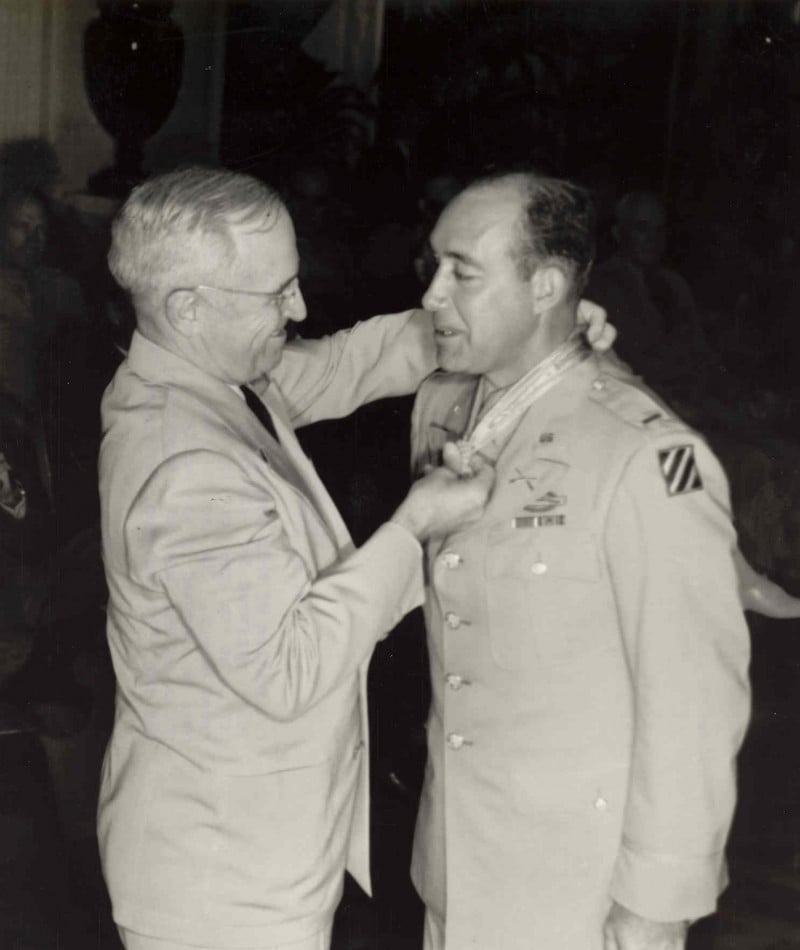
 For this leadership and execution he was awarded the Medal of honor, which was pinned on him by President Truman.

After recovering from wounds and medically discharged, he returned to Texas A&M and earned his PhD in Agronomy, passing away in 1986. Rest in Peace, Sir! 

Where do we find such warriors! 

Citation for the Medal of Honor to Dr. Eli Lamar Whitelyey

While leading his platoon on 27 December 1944, in savage house-to-house fighting through the fortress town of Sigolsheim, Germany, he attacked a building through a street swept by withering mortar and automatic-weapon fire. He was hit and severely wounded in the arm and shoulder; but he charged into the house alone and killed its two defenders. Hurling smoke and fragmentation grenades before him, he reached the next house and stormed inside, killing two and capturing 11 of the enemy. He continued leading his platoon in the extremely dangerous task of clearing hostile troops from strongpoints along the street until he reached a building held by fanatical Nazi troops. Although suffering from wounds which had rendered his left arm useless, he advanced on this strongly defended house and, after blasting out a wall with bazooka fire, charged through a hail of bullets. Wedging his submachine gun under his uninjured arm, he rushed into the house through the hole torn by his rockets, killed five of the enemy, and forced the remaining 12 to surrender. As he emerged to continue his fearless attack, he was again hit and critically wounded. In agony and with one eye pierced by a shell fragment, he shouted for his men to follow him to the next house. He was determined to stay in the fighting and remained at the head of his platoon until forcibly evacuated. By his disregard for personal safety, his aggressiveness while suffering from severe wounds, his determined leadership and superb courage, 1st Lt. Whiteley killed nine Germans, captured 23 more, and spearheaded an attack which cracked the core of enemy resistance in a vital area.


Sounds like a Hero to me! 


For those of you "mapophiles"

The village is marked by the 1 above Colmar 

DuckDuckGo 


Map of Sigolsheim Wikipedia


Sources

 https://en.wikipedia.org/wiki/Eli_L._Whiteley

https://www.tshaonline.org/handbook/entries/whiteley-eli-lamar