Tuesday, July 21, 2026

She Was a Good Dog ...

Kodi
OAFS Photo
The Nuke called me around eight o'clock Monday morning, she was on her way to the veterinarian as one of her dogs, one of our granddogs, had collapsed that morning and her prognosis didn't look good. When the vet's office tells you that they would try and keep your four-legged family member alive until you get there, that's not good.

Our dear granddog, Kodi, passed before The Nuke could get there.

We are devastated. Kodi, and her sister Bear, have been so much a part of our family for over a decade that it feels as if an important part of our lives has been ripped away.

Kodi patrolling grandma's garden a few years back.
OAFS Photo

Kodi and her sister Bear.
OAFS Photo
We're really worried about how Bear is going to react to Kodi's absence, the two have been inseparable for Kodi's entire life (Bear is a year older than Kodi). Bear always looks for Kodi when she's off at the vet's office or even if she's just sleeping in another part of the house.

Kodi on her Throne at Grandma's House
OAFS Photo

Kodi and Bear
It is dinner time, is it not?
OAFS Photo

Kodi, probably looking for Bear
OAFS Photo

Kodi checking for crumbs
(The grandkids had just had snacks in the living room.)
OAFS Photo

Kodi inspecting the lawn.
(Shouldn't you cut this, Grandpa?)
OAFS Photo
The last time we visited Maryland, two weeks ago, when I was petting Kodi, I told her to hang in there as long as she could.

Lord knows, she tried.

She was a good dog.

We will all miss her so much.

Sleep, dear Kodi, we'll see you again some day ...


Monday, July 20, 2026

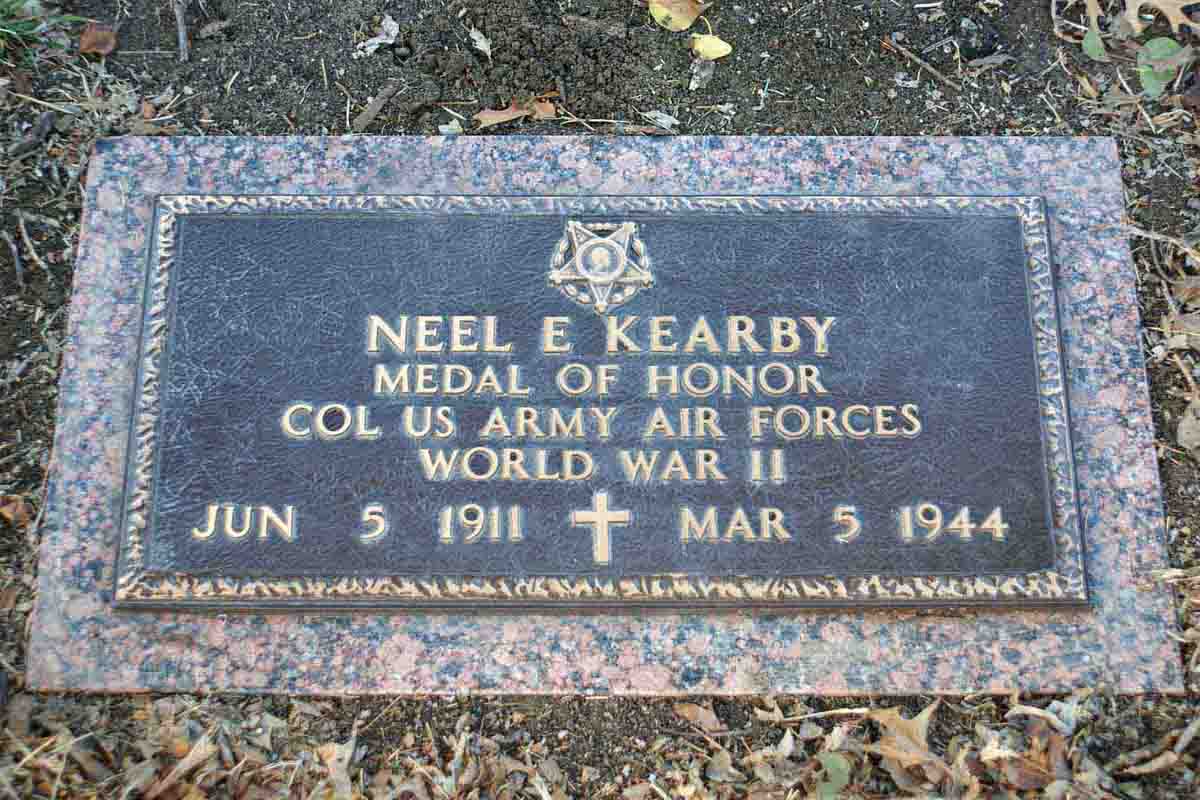
Donald J. Gott MOH & William E. Metzger Jr. MOH

Ok, Folks, this post tells the story of a Dual Issue of the Medal of Honor to two members of the same crew.   I'm sure there may be other times when the Medal was  issued to ground soldiers or naval sailors from the same unit who may have been both issued it, but dual award for aircrews are few and far between. There are a few and they will be covered also. So, here goes.

Comments - Medal of Honor Monday: William Metzger & Donald Gott
Lt Metzger (L) and Lt Gott (R) as they would look if you saw them from the front of the B-17 Source


In any case, the date is 9 November 1944 and the USAAF is attacking  Saarbrücken Germany.  A B-17 commanded by 1Lt Donald J. Gott and co-pilot 2LT William E. Metzger is on its bombing run when it is hit by Anti-Aircraft Artillery (AKA Triple A). 3 of it's engines are no longer useable and one is on fire.  This is especially dangerous as aviation gasoline is extremely flammable and since they are over the target, they still have at least half a load of gas, plus reserve. Several of the crew members were injured and the radio operator had lost an arm.  Lt Gott  and Lt Metzger decided that the best case scenario was to find a place in hopefully friendly territory where they could crash land and be rescued by friendly forces. (Given that they'd just bombed the target that was under them the populace below might not be in a charitable mood to treat them kindly.)

So, after dropping their bombs they exited the target area and found a friendlier area where the rest of the crew could safely bail out and did. 

 Lt Gott and Lt Metzger stayed on board and treated the radio operator while looking for a crash landing site.   Unfortunately, as the were approaching a field that looked like an acceptable landing site, at about 100' AGL (above ground level), the fire burned through the control cables and the bomber crashed killing them.  Adding to the tragic event, when one of the crew had bailed out, his parachute became caught on the horizontal stabilizer (the horizontal control that made the plane go up and down).  He evidently couldn't free himself and also died in the crash.  

Both Lt Gott and Lt Metzger were posthumously awarded the Medal of Honor for their actions. 


Source

Citation of the Award of the Medal of Honor to 1Lt Donald J Gott

In a bombing run upon the marshaling yards at Saarbrücken a B-17 aircraft piloted by 1st. Lt. Gott was seriously damaged by antiaircraft fire. Three of the aircraft's engines were damaged beyond control and on fire; dangerous flames from the No. 4 engine were leaping back as far as the tail assembly. Flares in the cockpit were ignited and a fire raged therein, which was further increased by free-flowing fluid from damaged hydraulic lines. The interphone system was rendered useless. In addition to these serious mechanical difficulties the engineer was wounded in the leg and the radio operator's arm was severed below the elbow. Suffering from intense pain, despite the application of a tourniquet, the radio operator fell unconscious. Faced with the imminent explosion of his aircraft, and death to his entire crew, mere seconds before bombs away on the target, 1st. Lt. Gott and his copilot conferred. Something had to be done immediately to save the life of the wounded radio operator. The lack of a static line and the thought that his unconscious body striking the ground in unknown territory would not bring immediate medical attention forced a quick decision. 1st. Lt. Gott and his copilot decided to fly the flaming aircraft to friendly territory and then attempt to crash land. Bombs were released on the target and the crippled aircraft proceeded alone to Allied-controlled territory. When that had been reached, 1st. Lt. Gott had the copilot personally inform all crewmembers to bail out. The copilot chose to remain with 1st. Lt. Gott in order to assist in landing the bomber. With only one normally functioning engine, and with the danger of explosion much greater, the aircraft banked into an open field, and when it was at an altitude of 100 feet it exploded, crashed, exploded again and then disintegrated. All 3 crew members were instantly killed. 1st. Lt. Gott's loyalty to his crew, his determination to accomplish the task set forth to him, and his deed of knowingly performing what may have been his last service to his country was an example of valor at its highest.


Citation of the Award of the Medal of Honor to 2Lt William E Metzger   

On a bombing run upon the marshaling yards at Saarbrücken, Germany, on 9 November 1944, a B17 aircraft on which 2d Lt. Metzger was serving as copilot was seriously damaged by antiaircraft fire Three of the aircraft's engines were damaged beyond control and on fire; dangerous flames from the No. 4 engine were leaping back as far as the tail assembly (https://en.wikipedia.org/wiki/Tail_assembly). Flares in the cockpit were ignited and a fire roared therein which was further increased by free-flowing fluid from damaged hydraulic lines. The interphone was rendered useless. In addition to these serious mechanical difficulties the engineer was wounded in the leg and the radio operator's arm was severed below the elbow. Suffering from intense pain, despite the application of a tourniquet (https://en.wikipedia.org/wiki/Tourniquet), the radio operator fell unconscious. Faced with the imminent explosion of his aircraft and death to his entire crew, mere seconds before bombs away on the target, 2d Lt. Metzger and his pilot conferred. Something had to be done immediately to save the life of the wounded radio operator. The lack of a static line and the thought that his unconscious body striking the ground in unknown territory would not bring immediate medical attention forced a quick decision. 2d Lt. Metzger and his pilot decided to fly the flaming aircraft to friendly territory and then attempt to crash land. Bombs were released on the target and the crippled aircraft proceeded along to Allied-controlled territory. When that had been reached 2d Lt. Metzger personally informed all crewmembers to bail out upon the suggestion of the pilot. 2d Lt. Metzger chose to remain with the pilot for the crash landing in order to assist him in this emergency. With only 1 normally functioning engine and with the danger of explosion much greater, the aircraft banked into an open field, and when it was at an altitude of 100 feet it exploded, crashed, exploded again, and then disintegrated. All 3 crewmembers were instantly killed. 2d Lt. Metzger's loyalty to his crew, his determination to accomplish the task set forth to him, and his deed of knowingly performing what may have been his last service to his country was an example of valor at its highest.


References

https://en.wikipedia.org/wiki/Donald_J._Gott

https://en.wikipedia.org/wiki/William_E._Metzger_Jr. 

https://www.uswarmemorials.org/html/monument_details.php?SiteID=755&MemID=1046 

https://www.thisdayinaviation.com/medal-of-honor-first-lieutenant-donald-j-gott-united-states-army-air-corps/ 

https://www.ghostsofthebattlefield.org/medal-of-honor/medal-of-honor-donald-j-gott-world-war-ii-air-mission-november-9-1944 

https://www.taraross.com/post/tdih-metzger-gott-moh 


Sunday, July 19, 2026

"Heart"-felt post

Hello Chanters, it's been minute since I've commented on any posts around here, much less written one of my own.  Recently, Sarge has been fully engaged in his storytelling during retirement, and Juvat has been as prolific as ever.  However, with Juvat's Medal of Honor posts, how many times can I comment that they have balls of steel?  


Not that I need to defend myself for my absence, but I had a lot going on past month and a half.  In March I had to seek conservatorship over my month-in-law due to her dementia, and the court requirements after that order are not insubstantial.  There's a lot of paperwork and court-ordered reporting, inventorying her assets, obtaining bonds, etc.  I also finished up a collateral duty with the Knights of Columbus, running membership across California, which was essentially a part time job.  Rewarding, but I'm very glad it's over.  The final month of the term was June, which was a very busy and demanding one, with constant emails, phone calls, and paperwork.  I also had several trips around California for that, and barely had time to breathe, much less relax, but my efforts were ultimately successful.  We blew past our membership goal and started a half-dozen new councils around the state, but getting there took a lot of work.  However, that was not the only eventful thing to happen. 


On Thursday June 11th as I was leaving a KofC meeting, I started getting a headache.  While on the road, my jaw tightened up, and it felt like my molars were being pushed out of my jaw.  I also had a pain in my neck up into my head which was pounding harder than I had ever felt.  So I diverted towards the hospital and was there within 10 minutes.  No Juvat, I didn't think about what you had gone through, and so I didn't pull over.  But in my defense, I was focused on the short drive to the hospital and the pain wasn't unbearable.  However, soon that pain radiated down into my chest , grew in intensity, and I had some shortness of breath.  By then I was pulling off the freeway, in sight of the hospital.   I walked into the ER and explained my symptoms.  I've had long ER waits in the past, but if you describe the symptoms I had, the ER brings you in immediately!  


AI-Generated

I seemed to be a very popular patient, as I had plenty of attention as the nurses quickly hooked me up to every monitor and machine.  That showed my blood pressure at 199 over 99 and a heart rate of 120.  They did the full heart attack work up, gave me some nitroglycerin under the tongue to bring my BP down, looped the O2 hose around my ears and into my nose, and called in for both an X-Ray and a CT.  They also took some blood to check for the presence of the TPA enzyme (natural clot reducer) to determine if I was actually having a heart attack or not.  

It took a few hours to get the results, and fortunately, I was in the clear, as the TPA test, the X-Ray and CT were all negative.  By the time the second TPA test was complete four hours later, it was dawn and the doctor released me with an order to follow up with my primary care Doc.  I wanted to know what was actually wrong with me, but I got nothing more than the fact that I wasn't having heart attack and I was no longer in an emergent situation.  However, they did prescribe me some Amlodipine for blood pressure, although by the time I left, it was back in my normal, non-hypertensive state (118/80).  

I wasn't able to pick up that prescription until Friday afternoon though because later that morning at 9:00 am, shortly after being discharged, I had an appointment with the Social Security Administration.  As I've mentioned here before, I have a special needs adult son who receives SSI, and I'm his representative payee.  It's my responsibility to manage that money and ensure his group home receives payment.  Most of the funds are for his board and care, but a little is for personal care and incidentals (P&I), like clothing, soap, toothpaste, etc.  While the money must be deposited in a federally insured bank, I prefer to use Navy Federal Credit Union, which doesn't meet their criteria.  Therefore, each month I would transfer the money from USAA (which doesn't allow auto payments through Zelle) into my Navy Federal account and pay his room and board from there.    The SSI comes in at the end of the month and it is my responsibility to ensure that that money is spent not only wisely, but timely as well.  Since SSI is needs-based, the bank balance in that USAA account should never be greater than $2,000.  So if grandma gives him a little money, or his P&I sits unspent, and I pay his rent on the 4th when it's due, it's easy to bust that 2k limit.   His rent is not very expensive, and I don't need a timely transfer of his funds to my account in order to pay it, so I was not always timely in that actual transfer.  The average balance in that account was rarely over $2,000, but 18 separate times on the very first day of the month it was.  SSA had sent me a letter claiming that because of my oversight, they were going to come after me to recoup 18 months of his payments.  Talk about a major stressor!  I was oblivious to the stress though.

I didn't realize it at the time, but the stress had been weighing on me for a couple months (since the letter from the SSA scheduling that appt), at the same time I was busy with KofC duties.  However, logic was telling me that this would all be worked out, I would easily be able to explain my self and promise to be more diligent in the future.  Yet, my body wasn't listening to my brain.  I realized later the jaw pain came from me clenching my teeth at night, AKA Bruxism or TMD, a known reaction to stress for me, which had been documented in my health records from my flying days long ago.  That also caused the headache.  The high blood pressure was just an associated symptom due to the stress. 

While the meeting was completed with some satisfaction, and the bureaucrat understood and accepted my explanation, he said it was a peer review.  I would have to write all of it up and provide a team of 3 agents with 3 years of bank statements so they could analyze my banking efforts.  Again, my logic told me that this was an easy task and I would be able to satisfy their demands, but my body was not listening.  I wound up spending Saturday night in the ER- same symptoms.  While I knew it was just a continued stress response, my cousin who is a nurse, with whom we were out to dinner, demanded that I head straight to the ER.  As expected, this was a repeat of Thursday night, both with their actions and the results, and my blood pressure, heart rate, and overall feeling of health came back into limits by the next morning. 

Sunday was spent writing up my statement and downloading bank statements.  I also uploaded them into an AI model with the prompt of identifying the average daily balance and average monthly balance, as well as a coherent narrative.  That proved, at least to me that while I did not meet the strict interpretation of the regulation (the 2K limit), I met the spirit of it through regular transfers and payments of his board and care. I also added to my statement that I always spent the money on my son's care and no fraudulent activity was ever intended.  I provided all of this to the agent on Monday and felt an instant sense of calm and relief.  Since then my BP has been within acceptable limits, both with the Rx, and without (initial script ran out).


The rest of the month was filled with various appointments, a full cardiac contrast CT workup, a stress test, an appointment with my primary care physician and a cardiac nurse.  The contrast CT did show some slight blockage in an artery and I will soon have a angioplasty as some preventative maintenance.  So while it was a month filled with a lot of good lessons for me, it was also probably somewhat of a blessing.  I need to not only recognize situations that might be stressful (since I won't necessarily feel stressed), but I may need to take on less responsibility to manage that stress.  And losing some weight won't hurt.  That SSA problem, while scary for my wife and stressful, ultimately revealed that blockage, so getting that taken care of will be good.  I have also set up an auto transfer off his entire SSI payment into my NFCU account on the 30th of the month so he'll never be over.  

So I have some work ahead of me.  Less KofC, more exercise.  Delegate some more to my wife and stop being a control freak.  Finish all the court stuff and take more vacations!


Saturday, July 18, 2026

History is On Hold ...

OAFS Photo
So I'm calling for a moratorium on my historical fiction posts.

Why?

Most of you don't care for them, especially the ones involving French. I mean I get it, the history of the Napoleonic era is boring for many people, not to me, but hey, I like tofu, many don't.

I thought about quitting blogging altogether, like today, but ...

It's too soon for such drastic measures. I may scale back the number of posts I do in a week. In other words, posting every day will no longer be a thing. There were days when I couldn't think of anything to post, so I'd post a rerun. In my book, that didn't count as "posting every day."

Now a blogger I follow decided a while back to only post on Fridays. Yeah, I didn't like it at first, now I really look forward to visiting his blog on Friday. It's like Christmas, man, lots of posts under the tree, so to speak.

Here's one from today, addresses a particular pet peeve of mine ...

Yeah, ya gotta chase a link to get to another link, but as he posted it first, I need you to pass through his place to get to the main article in question. (Gotta increase those hits, dontcha know? - Even if many of them are bogus spambot visits.)

Anyhoo.

No historical fiction for a while. Now that I know what most of you don't care for, I won't post it any more, or at least not as frequently.

I really miss this ...


Being at the beach with my grandkids was awesome, as it is every year, it never gets old. This year, on our last day there, some of the "grown ups" decided they wanted to skip the beach and go into town. There's a nice touristy town not far away so they wanted to hit that up.

Me?

No thanks, I'm here for the beach, the forest, and the sky, I'll stay here.

So I went on down to the waves, as I was wading out, I turned and noticed The Nuke and grandson Roberto heading down from the house. Turns out he'd rather spend the day goofing around with grandpa then "go shopping," even though there was the promise of ice cream, or his equivalent, sherbet. (Robbo doesn't care for ice cream, kid doesn't like chocolate either, hard to believe we're related, though many of his personality traits might be traced to me, but certainly not in a court of law. Heh.)

After The Nuke left, Tuttle's daughter, my bonus granddaughter, aka Her Grace, came down the path to join Roberto and I in "the pool." (We have our own private beach down there, so I refer to Chesapeake Bay as "the pool.")

The three of us enjoyed our last day at the beach until the thunder rumbles arrived round about 1500 hours, local. But it had been a good day, nay, a great day, much better than shopping.

But the "grown ups" assured me that they had a good time, and Finnegan got ice cream.

Roberto didn't mind, like he said, "Nice, we had the ocean."

Miss that, I do.

Ciao!


Friday, July 17, 2026

Taking a Breather ...

OAFS Photo
I know some of you read my scribblings, but yesterday's outing was weak, less than 200 hits. Which made me long for that place above.

I'm not getting the return on my investment in the time it takes to write this stuff, so today was a "Why bother?" kind of day.

Sigh ...

Those posts out in the water often had birds perched thereupon. The last couple of years I could have sworn that they were cormorants. So I just assumed that this year was the same.

Nope.

OAFS Photo
This year I was surprised to note that the posts held pelicans, didn't realize that until I saw one go fishing. Those rather large mouths are hard to mistake.

Apparently brown pelicans head to the Chesapeake in the summer to breed. Perhaps we visited too early in June to see them the first two years. This year, coming as we did on the last full week in June, we saw pelicans.

We also saw raptors, two of the F-22 variety and one of the feathered variety, an osprey (the bird, not the aircraft). Also saw seahawks, er, I mean Seahawks, the MH-60 variety.

Saw lots of terns but no seagulls, something I've noticed before when visiting Virginia's shores. I'd research that but ...

Maybe another day.

Not now.

Bis gleich ...


Thursday, July 16, 2026

In Front of Charleroi

Napoleon in Charleroi
Horace Vernet (PD)
Napoléon shifted uncomfortably in his saddle as he lowered his glass, rather than handing it to an aide, he tucked it into one of the saddlebags of his borrowed mount. Maréchal Davout, also dressed in the uniform of a mounted chasseur, continued to stare through his glass at the scene down on the river. Unashamedly he was wearing his spectacles, he knew Napoléon didn't like them, but the Emperor liked defeat even less, so Davout would wear his eyeglasses.

"Not much of an obstacle on the bridge, my engineers should sweep that aside with no trouble." Napoléon commented.

"Indeed Sire, but did you glass the buildings on the far side of the bridge? There's infantry in those windows, the engineers will have to cross under fire."

The Emperor grunted as he yanked the reins of his horse to turn it back to the French encampment not far away. "Yes, but it's what I pay them for, isn't it?"

Davout knew better that to respond to that remark. He turned his horse as well, following Napoléon back up the track. They had seen what they needed to see. The Prussians were manning the bridges over the Sambre, it would be impossible to get scouts over the bridges to fully fix the Prussian positions. Fording the river at some point might be possible, but with the recent rains, the river was high. Fords might be few and far between.


The ride back to headquarters was quiet. The Emperor and the Marshal were back in their regular uniforms, Napoléon had not liked wearing the fatigue cap of a cavalry lieutenant, but he had thought it ridiculous to don a shako, he thought he looked odd indeed in that headgear.

Davout said not a word, his thoughts were turned to what the scouts had discovered on the main road to Brussels. He assumed that the Emperor would expect him to deal with Wellington with almost no help from the forces under the Emperor's direct command. The job of the left wing would be to take what advantageous positions they could and to keep Wellington's soldiers occupied while the bulk of the Armée du Nord fell on Blücher's Prussians.

Davout looked up when he heard a commotion ahead, a messenger from headquarters had intercepted them. He rode closer to the Emperor to listen.

Napoléon saw Davout come close and turned to him, "Soult has arrived in camp, there is still no word of Ney. The man expects a command but cannot be bothered to come to the front?"

He leaned in close to Davout and hissed under his breath so that the others might not hear, "I fear the man is addled, has he lost his senses?"

Davout coughed, holding his hand over his mouth as he then said, "The Marshal and his wife were ill-treated by the Bourbons, it upset him greatly."

Napoléon huffed and spurred his horse, "Let us see what le Maréchal Soult has for us, word from Paris perhaps?"


"So St. Cyr has sent the Chamber of Representatives¹ home for an 'extended' vacation, eh?"

Soult drank some cognac, coughed then answered, "Yes Sire, they were wanting to meet and actually make laws in your absence."

"What of the Chamber of Peers?"

"They are content to await the outcome of the campaign. They do not desire to arouse St. Cyr's ire."

"St. Cyr's ire? 'Tis nothing compared to what I might give them!" the Emperor snapped as he tossed off his coat and took a seat by the table where Berthier had spread his maps.

He stared at the maps, identifying the bridge they had just visited, visualizing the terrain beyond. Looking at another section he saw that there was a crossroads, Quatre Bras it was called. His mind began to formulate a plan of action. If the Prussians took up positions along, his finger traced the line of a small stream - Ligny according to the label - this watercourse, he would strike them there and attempt to drive them to the northeast, away from Wellington.

"Berthier, what do our spies tell us of the Prussian army?"

"Sire, there is a single corps, that of Ziethen, to our northeast, not far from Charleroi. There are two more corps, those of Pirch and Thielmann, within a day's march, and then there is Bulow's corps, on the outskirts of Liege. Say two days, or more, for them to come up."

"And Wellington?"

"His army is scattered across the landscape, we have many approaches to Brussels, my spies tell me that he thinks Mons is the most likely path we'll take, so he must cover a number of places. He is thin in many places trying to cover every approach. On the main road, the Brussels chaussée, there are mostly Belgians and Dutch, many of whom marched with us not that long ago."

Napoléon laughed, a harsh bark of a laugh, "Eh, perhaps they will rejoin us once we drive the English and their hirelings into the sea."

A few laughs came from the staff officers, but Soult and Davout didn't crack a smile.

Source
"I know you don't think much of the British, Sire, but when led by Wellington, and in sound defensive positions, they are nearly immoveable. I doubt they will run, more likely they will die to a man rather than retreat." Soult growled.

"Then die they shall," Davout stated.


Général de Division Gérard looked at the officer of the Imperial Guard barring his way to the Emperor's headquarters, set up in a large barn on the outskirts of Beaumont.²

"I insist on speaking to the Emperor. Now!"

The cavalry officer stared at the general, almost daring the man to make some sudden move.

From within the tent, the Emperor spoke, "It's alright, Hachette, I'll see the general. Please stay near, I may have a job for you."

Gérard gave the cavalryman a dirty look as he was ushered into the Emperor's presence.

"So Gérard, don't like the idea of being sent back to Paris, eh?"

"Sire, I have fought by your side for many years, why send me home now?"

With a sly look, Napoléon asked, "So, Bourmont, what did you see in that royalist that I did not?"

"He is, was, a most efficient officer, and ..."

"I suspected the man of working with Fouché and Talleyrand to the detriment of the Empire. You do not trust my judgement?"

"No, Sire, yes ..."

After a moments hesitation, Gérard stood tall and said, "Give me my corps, or give me a firing squad. If you don't trust me, shoot me!"

Abruptly Napoléon called out, "Berthier!"

The chief of staff leaned into the room, "Sire?"

"Have the orders relieving Gérard of the command of IV Corps been dispatched yet?"

"No Sire, I had a messenger advise the general that his relief was expected, though not yet official."

"Very well, thank you Berthier."

The Emperor stood up and clapped Gérard on the shoulder, "Go back to your command, Gérard. Betray me and I shall grant you your second request."

Gérard looked puzzled for a moment, "My second ..." then his face went pale as a sheet.

The general thanked the Emperor then spun on his heel. Berthier reentered the room.

"They can be like children, Berthier. But now, any word of Ney?"


¹ Napoléon had created the Charter of 1815 which laid out the new system of government. This charter wasn't much different from the constitution put forth by the government of Louis XVIII. See here.
² This town was in France in 1815, it is now in Belgium.

Wednesday, July 15, 2026

What Happened? Where the Heck is Mont St Jean?

French Supply Train in Camp, during the Waterloo campaign 1815
Florent Vincent
Source
Napoléon had mustered the equivalent of six combined arms corps (infantry, artillery, and cavalry) and four cavalry corps (cavalry and horse artillery) at the frontier with Belgium by early June. Roughly 125,000 men and over 300 cannon were ready to march against the enemy.

That enemy was composed of roughly 107,000 Anglo-Allied (English, Irish, Scots, Welshman, Dutchmen, Belgians, and various assorted Germans, not the least of which were the King's German Legion) troops under the Duke of Wellington and some 123,000 Prussians under Field Marshal Blücher. Napoléon had rough parity with the Prussians and outnumbered the Anglo-Allied army in both quantity and (IMHO) quality.

As can be seen below, Wellington's forces were spread from Brussels to Mons on a north-south line and from Genappe to south of Ghent on an east-west line. Each red block indicates an Anglo-Allied unit, the blue are the French, and the gray are the Prussians.

The Prussians were concentrated in four blocks of corps strength as can be seen on the map. They could concentrate forward near Ligny with Ziethen, which they did in real life, or fall back on Liege which led back to the Rhine and their supply bases.

I've circled in green the four locations where battles were fought during this campaign: Quatre Bras and Ligny on the 16th of June, then Mont St Jean and Wavre on the 18th of June. (No boys and girls, there was no battle fought at Waterloo, that was where Wellington had his headquarters and he liked the name, easy for an Englishman to pronounce, dontcha know. As he won the battle, he got to name it. Though the Prussians might argue that point, with good reason. They call it the battle of La Belle Alliance, the inn near Napoléon's position during the battle where Wellington and Blücher met as the French army fled down the road to Paris. Incidentally, La Belle Alliance translates to "the beautiful alliance." So named by the proprietor of said inn, apparently it came with his wife when they got married. The place still exists and was a night club, last I knew.)

Source
In real life, the French drove back the Prussian outposts on the 15th of June in the vicinity of Charleroi. The delay gave the Prussians time to concentrate three corps (Ziethen, Pirch, and Thielmann) in the area of Ligny. Napoléon brought up the equivalent of four combined arms corps (III Corps under Vandamme, IV Corps under Gérard, VI Corps under Lobau, and the Imperial Guard under Drouot) and most of three cavalry corps (the four cavalry corps are shown on the map in one block, the one labeled "Grouchy").

Napoléon sent II Corps (Reille) and elements of one cavalry corps with some Guard cavalry to drive off the Anglo-Allied units near Quatre Bras. D'Erlon, commanding I Corps was held in general reserve behind the II Corps. The Emperor took personal command at Ligny, Marshal Michel Ney commanded the left wing, the chaps going up against Quatre Bras.

The fighting at Ligny was bloody and brutal, no quarter was asked or given. At Quatre Bras, Ney let his troops have their breakfast before launching an attack on the crossroads around two in the afternoon.

Two. In the afternoon. (Kinda late, dontcha think?)

Meanwhile, the Emperor called on D'Erlon to bring his corps to Ligny, where he could fall on the rear of the Prussian right flank and complete that army's utter destruction. Ney recalled D'Erlon to Quatre Bras. So I Corps spent the battle marching back and forth, their intervention on either field would have been decisive, but their arrival at Ligny would have probably knocked the Prussians all the way back to Liege. (Field Marshal Blücher got lucky, he had his horse shot out from under him while leading an attack and went unnoticed in the gloaming, being ridden over by French cavalry at least twice.)

Now Blücher's chief of staff, Gneisenau, didn't trust the Duke of Wellington, his initial desire was to retreat on Ligny. He did think better of it and ordered a retreat on Wavre, where the Prussian army would be able to provide support to Wellington, who they knew would retreat when he got word of the Prussian defeat at Ligny. Wellington's army was absolutely no match for the combined forces under Napoléon.

So back they went, Wellington towards Mont St Jean, a position he was familiar with, and the Prussians to Wavre. Not an easy march to Mont St Jean for the Prussians but doable. (As they accomplished this in real life, they proved it to be doable. But had they had to fight their way there? No way. IMHO)

Napoléon was exhausted after Ligny. He decided to move against Wellington next, leaving Grouchy to chase down what the Emperor thought were the remnants of Blücher's army while he dealt with the Anglo-Allied army.

Grouchy's pursuit got a late start, mostly because of the Emperor wanting to review the troops and walk the field of what turned out to be his very last victory. Ney also dawdled at Quatre Bras, again having a leisurely breakfast while the Anglo-Allies scooted north as the heavens erupted in a spectacular thunderstorm. Heavy rain turned the fields and the side roads into muck, which did slow the pursuit of both wings.

The Anglo-Allies made it to Mont St Jean where they populated the ridge there and a number of sturdy farmsteads to oppose Napoléon's army coming up, albeit slowly, from the south.

Grouchy simply plodded along after the Prussians. Napoléon's orders had been to keep the tip of his sword at Blücher's backside. What Grouchy did more or less was wave a butter knife at him from a comfortable distance. A close pursuit might have caused the Prussians to disintegrate. The pursuit was anything but close.

At Mont St Jean, the 18th dawned wet and soggy. The ground was extraordinarily muddy and Napoléon's artillery chief recommended waiting to start the battle until after the ground had dried out some. So they waited, Napoléon reviewed the troops, then retired to rest his weary ass (he was still being bothered by piles, especially after having been in the saddle most of the 16th and a large part of the 17th.) So he left Ney in charge.

The French opened the battle (probably after 1300 hours) with a cannonade on the center of Wellington's line and a probe towards a rather large complex of farm buildings on Wellington's right flank. Place called Hougoumont, also known as the Chateau de Goumont. That place had a competent garrison, mostly British Guards and some German light infantry in the woods in front of the place.

History has it that Napoléon wanted to distract the British at Hougoumont, but his kid brother Jérôme, who commanded a division in II Corps, let his troops get carried away. The corps commander, Reille, did little to restrain Jérôme. So what should have been a sideshow sucked in a large part of II Corps.

On Napoléon's right, I Corps finally went into action, using an odd formation which massed the troops in great blocks. Few could fire their weapons, but as a way to get quickly over the field, it wasn't that bad of an idea. It nearly worked, but for the British cavalry's Union Brigade (made up of English, Scottish, and Irish troops) headlong attack at the head of the left most French column. Which completely disrupted them, causing them to flee back to their starting point.

The British cavalry chased them all the way to the gun line where they were counterattacked by French cavalry. In reality, Wellington traded a single cavalry brigade for 12 brigades of French infantry. Not a bad deal.

After that early success the French continued to pound the Anglo-Allied line. A number of Wellington's units fled the field, leading Marshal Ney to think that the Anglo-Allied army was retreating, so he launched most of his cavalry, thousands of horsemen, at the Anglo-Allied ridge. Where they were driven off by artillery and infantry fire from the infantry massed in squares, a pretty good all-round defense against cavalry.

The Battle of Waterloo: The British Squares Receiving the Charge of the French Cuirassiers
Henri Félix Emmanuel Philippoteaux¹ (PD)
Sometime in the early evening Napoléon came out of his misery and realized that Ney was thrashing. Though he had answered rudely when Ney had begged for infantry, "What does he expect me to do? Make them?" He decided to slap together some of the surviving units from I Corps (there were quite a few lying about). (Ignoring the fact that he still had the Imperial Guard in reserve. Though in all fairness, the Prussians were nearby and the Emperor knew it.)

A task group was put together to seize the farm complex of La Haye Sainte which stood just below the center of Wellington's position. There had been fighting around that place all day, but now the French got serious and the men of the King's German Legion, manning that post, ran out of ammunition. So they had no choice but to flee.

At nearly the same time the Prussians were making their presence known on the French right flank, the Emperor had already sent the small VI Corps to that flank to stop the Prussians and had had to reinforce them with elements of the Imperial Guard.

As the sun set, as men screamed and died, as cannon and musket fire shattered the ear drums of the combatants as well as clogging the air with thick clouds of powder smoke, the Duke of Wellington allegedly muttered, "Give me night, or give me the Prussians." He could feel the morale of his army wavering.

That's about the time Napoléon sent his last reserve into the fight, elements of the Imperial Guard went up the ridge, were shattered by musket fire, and the French army went from being disciplined soldiers to a panicked mob. Fleeing back from whence they came.

Near Wavre, Grouchy and his two corps essentially kept one Prussian corps away from the main show. He basically did little or nothing. Had he tried to interpose his troops between Wavre and Mont St Jean, or launched attacks against the marching Prussians trying to cross the sodden terrain using bad roads, who knows what might have happened.

Well, we'll see, won't we?


¹ One of my favorite paintings though the terrain in the background is horribly inaccurate.

Tuesday, July 14, 2026

Uh Wait, What?

The Morning of The Battle of Waterloo: the French Await Napoleon's Orders
Ernest Crofts
Source
Okay, in my haste to entertain you with my fictional tale of what might have been had the French won at Waterloo, I made a huge error. It's an error frequently fallen into by those who consider themselves experts in any field. Trying to explain something to someone, who may not be an expert in that field or perhaps know nothing at all about that field, without going into agonizing detail about that field. Perhaps assuming that the person to whom they are telling the story has the same intimate knowledge of the subject at hand.

Mea culpa, for I have done exactly that.

For instance, in telling the tale of how Napoléon averted disaster by having some guy named Bourmont killed, "accidentally" of course, I neglected to really tell you the whole story. I just kind of assumed everyone would say, "Oh yeah, Bourmont, kill that traitor." Most of you, no doubt, have no idea who that guy was. Unless you chased the link to the Wikipedia article about him. And really, who wants to constantly chase links during a story? I know I don't, my stance is always, "Come on, get on with it, I'm not chasing your bloody link again."

So this post is an attempt to at least get everyone on the same page concerning the Waterloo campaign, or more properly the Hundred Days campaign. Wikipedia does have a good article on the campaign which I'll let you track down at your leisure, or not at all should that be your desire.

Anyhoo ...

The Waterloo campaign was the final act of a long series of wars begun during the French Revolution, then continuing during Napoléon Bonaparte's reign as Emperor of France. Our focus is on the Napoleonic Wars, running from 1805 to 1815.

Now the French pretty much had things go their way up until about 1808, 1809 if you count the campaign that year against Austria, a French victory. But in 1808 the French got sucked into Spain, their Vietnam/Afghanistan if you will. Many historians call the Spanish campaign the bleeding ulcer, it was a constant drain on French resources and seriously hurt French morale.

Why Spain though? Well, you have to understand that the French had pretty much beaten down the Prussians, the Austrians, and the Russians. But every time they ended the war, the British would dig deep and come up with more money to finance yet another coalition to fight Napoléon. They had the advantage of their island and the most powerful navy on the planet between them and the French.

As much as Napoléon wanted to be done with those pesky islanders, he couldn't get to them. The Royal Navy had smashed the combined French and Spanish fleets (huh, the Spanish, I thought the French were their enemies) at Trafalgar. Napoléon was a master of land combat, never did understand the sea. A big advantage the British had was that their navy was constantly at sea, blockading the French and cutting off their trade from the rest of the world. The French mostly sat in port, plotting to drive the Brits off but never getting quite there. Though, for the most part, French ships were better, it ain't the ship, it's the crew. And the Royal Navy had some excellent sailors.

Anyhoo, why were the Brits so pissed off at the French, I mean besides the centuries of warfare and animosity between those two nations? Well, the British believed in trade, and making money from that trade. They liked the idea of a balance of power on the continent, better for trade and better for the British economy.

So the Napoleonic Wars could be viewed as a long squabble over hegemony in Europe. The French on the one hand wanting to dominate, the British on the other being quite opposed to that.

Long story short, Napoléon came up with this thing he called the Continental System whereby British trade would be locked out of Europe altogether. It might have worked had Napoléon thought it through a lot better than he did.

The Russians, being far from Paris, and being huge and kind of isolated, had made a lot of money trading with the British. Having that trade cut off really hurt the Russian economy, so they began trading with the British again, even after "allying" themselves with the French (after getting their asses kicked at the Battle of Friedland in 1807). Yup, that pissed Napoléon off, so he decided to invade Russia to enforce his Continental System.

Invade Russia, where have I heard that before?

At any rate, Napoléon took this huge army into Russia in 1812, many of those guys never returned home. It was the Emperor's first big defeat. Though he managed to scrape an army together in 1813, the French were driven back behind their own borders and the Campaign of 1814 was fought within France.

Yup, they lost and Napoléon was forced into exile on the island of Elba. Pretty much forced by circumstance and his own marshals to give up the throne altogether.

The Bourbon dynasty returned to France and pretty much tried to set the clock back to 1789. As if the Revolution had never happened. As is true of I'd say 95% of all royalty, the Bourbons were too stupid to make a go of it. They might have succeeded as the French people were pretty sick of the constant wars. But bring in the air-headed nobles swinging their titles and names around and suddenly Napoléon didn't seem all that bad.

The French people were pissed, the French Army was pissed, and the many veterans who had marched with Napoléon were also pissed. Like old soldiers everywhere, they had forgotten the horrors and the hardship and only remembered the "good times."

Napoléon heard all of this and decided to have another go at things. He landed on the coast of southern France with less than two thousand men, and within a month was back in Paris, back on the throne, and apparently willing to let bygones be bygones, he appealed for peace.

The allied powers (Great Britain, Prussia, Austria, Russia, Spain, Portugal, a slew of duchies and principalities, and France herself in the person of Talleyrand) had been meeting in Vienna to decide the future of Europe. Upon hearing of Napoléon's return they declared him an outlaw, they didn't declare war against France, they declared war against a person, Napoléon Bonaparte.

The Emperor had to scurry, basically slapping an army together in record time to contend with all of Europe. Small armies would suffice to watch the frontiers as it would take time for the Prussians, Austrians, and Russians to get their armies to France, but to go after a nearby enemy the Emperor put together a fairly creditable force, the Armée du Nord, or Army of the North, to strike into Belgium where a Prussian army under Blücher was waiting to advance on Paris and an Anglo-Allied army under the Duke of Wellington was waiting for the same.

Napoléon's thought process was pretty simple, destroy these two armies and the other nations might just say the hell with it and throw in the towel. Especially if he could destroy Wellington's army as it might convince the British government to put away their checkbook. No money to fight Napoléon and maybe he would leave everyone alone. (He'd never known a moment where the British weren't paying someone to fight him so you never know, maybe he would've been content with peace. At least for a while. Who knows?)

Here's how things stood at the beginning of June 1815 -

Source
Below is a map of the dispositions of Wellington and Blücher. Note that near the small crossroads village of Quatre Bras is a corps labeled as being under the command of the Prince of Orange, heir to the throne of the Netherlands. Twenty two years old and a full general (!)  in the British army, he commanded the Anglo-Allied troops in Belgium prior to Wellington's arrival. He was at Waterloo, the Butte du Lion on that field was erected over the spot where he was wounded, and he played a big part in the battle.

British historians denigrate his performance at the battle for various reasons. Dutch historians disagree. One can say that the Prince was young and inexperienced, this being his first command. But he did make mistakes and it did lead to unnecessary losses. Of course, a lot of far more experienced commanders have made similar errors. It's war, it's hard to be everywhere at once and understand everything going on amidst the powder smoke, the gunfire, and the screams of the dying.

Source
So the strategic big picture is that the French face two armies, they have one. If their enemy joins forces, the war is lost. If Napoléon can get between them, screen one while destroying the other, they had a chance at victory.

The Emperor determined that the Prussians would be attacked first, drive them back on their lines of supply running to the Rhine, in the opposite direction of Wellington's lines of supply which ran to the Channel ports, thence to England.

But could he get there fast enough, catching his opponents off guard?

In real life he did.

"Napoléon has humbugged me, by God; he has gained twenty-four hours' march on me." - The Duke of Wellington when informed of Napoléon's army marching into Belgium

On the morrow, we'll look at the tactical picture presented to the Armée du Nord and its commanders.

Bataille d'Iéna. 14 octobre 1806
Horace Vernet (PD)
À bientôt!


Author's Note: I note that today is Bastille Day, or as the French call it, La Fête Nationale. I would be remiss if I didn't mention that. My French ancestors would be spinning in their graves if I forgot ...